
Written by webtechs

Pool Filter Cleaning After Gilbert Monsoon Season

Does Your Pool Filter Need Cleaning After Monsoon Season?

By September, a Gilbert pool may look better on the surface while the filter is still carrying weeks of dust, leaves, pollen and fine debris. Arizona storms can drop a surprising amount of material into the water, and much of what escapes the skimmer eventually reaches the filter.

That buildup does not always produce an immediate failure. The water may remain usable while circulation slowly weakens and the pump works against greater resistance. A post monsoon filter check can restore normal flow before the quieter autumn season.

Start With the Pressure Gauge

Every pool filter has a normal operating pressure when it is clean and the system is running correctly. That reading is more useful than comparing your gauge with a neighbor’s because plumbing layouts, pumps and filters differ.

Record the pressure after a professional cleaning. When the reading rises noticeably above that clean starting point, the filter may be holding enough dirt to restrict flow. A gauge that never changes, stays at zero or jumps erratically may itself be damaged. Pool Service Gilbert advises backwashing a DE filter when its gauge rises above the normal reading.

Watch the Returns and Pool Cleaner

Reduced movement at the return jets can signal that water is struggling to pass through the system. An in floor cleaning system may cycle poorly, while a suction cleaner may move slowly or stop climbing walls.

Weak circulation does not prove the filter is dirty. A full pump basket, blocked skimmer, air leak, closed valve or pump problem can produce similar symptoms. The complete circulation path should be checked before any part is blamed.

Cloudy Water Can Point to Filtration Trouble

Chemical balance and filtration work together. Chlorine helps control contaminants, but the filter still has to remove suspended particles. Fine monsoon dust can leave a pool looking dull or hazy after the larger debris has been removed.

The Town of Chandler advises pool owners to keep up with backwashing and cartridge cleaning during monsoon season because windblown dirt can clog filters and make it harder for the equipment to clean the water. Cloudiness that persists after the chemistry has been corrected is a sensible reason to inspect the filter.

The Cleaning Method Depends on the Filter

Cartridge filters are opened so the elements can be removed, rinsed and inspected. Pleats should be checked for tears, flattened areas, damaged bands and heavy scale. A cartridge that remains restricted after proper cleaning may need replacement.

Sand and diatomaceous earth filters use different procedures. Backwashing reverses water flow to carry collected debris out of the tank, but it should be done when the filter needs it rather than simply because a calendar date has arrived. Internal parts and valves also deserve inspection when performance remains poor.

Do Not Ignore Arizona Hard Water

Gilbert water can leave mineral deposits on filter elements and inside equipment. A cartridge may look cleaner after rinsing while still carrying scale that restricts flow. Harsh chemicals or pressure washing can damage filter material, so the cleaning method should follow the manufacturer’s instructions.

Professional service also provides an opportunity to inspect the tank, pressure gauge, air relief assembly, seals and clamps. Cracks, leaks or damaged locking parts should be addressed before the system is restarted. Local competitors also identify hard water scale as a common cause of declining filter performance in Gilbert.

Make Filter Care Part of the Autumn Reset

After the last major storms, clear the baskets, brush and vacuum the pool, test the water and check the filtration system under normal operation. Note the pressure, return flow and unusual pump noise. This creates a useful baseline for the cooler months.

A clean filter cannot correct a failing pump or poor water chemistry, but it gives the system a fair chance to work. Weekly maintenance may also become easier because the pool can circulate and capture debris more effectively.

Schedule Pool Filter Cleaning in Gilbert

Pool Service Gilbert has served the Valley since 2004 and provides pool filter cleaning, weekly service, repairs and equipment installation throughout Gilbert and nearby East Valley communities. The company is family owned, fully insured, CPO certified and BBB accredited. To arrange a post monsoon filter inspection or cleaning, call Pool Service Gilbert at 480 748 3022 and get the circulation system ready for autumn.

References

Pool Service Gilbert Filter Cleaning

Pool Service Gilbert Weekly Cleaning

Town of Chandler Monsoon Pool Maintenance
Hayward Residential Pool Filters

Gilbert Poolman Monsoon Pool Guide

Pool Evaporation vs Leak in Gilbert: How to Tell
Written by webtechs

Pool Evaporation vs Leak in Gilbert: How to Tell

A falling water level is common during an Arizona summer, but there is a point when normal evaporation stops being a convincing explanation. In August, heat, dry air, wind and frequent swimming can all remove water from a backyard pool. A plumbing problem can look almost identical at first.

Knowing the difference matters. A leak can waste water, raise utility bills and allow damage to spread around the pool or equipment pad. Before adding water every few days, watch how the pool behaves and carry out a simple comparison test.

Expect Some Water Loss During a Gilbert Summer

Arizona pools lose considerable water through evaporation. The Arizona Department of Water Resources reports that a standard uncovered pool may lose four to six feet over a year, with most of that loss occurring during summer.

The rate changes from day to day. Hot temperatures, low humidity and moving air speed up evaporation. Waterfalls and fountains expose more water to the air, while swimming removes water through splashing and wet swimsuits.

A small, steady drop during a hot week may therefore be normal. A sudden change, or a pool that needs frequent refilling despite similar weather and use, deserves closer attention.

Try the Bucket Test

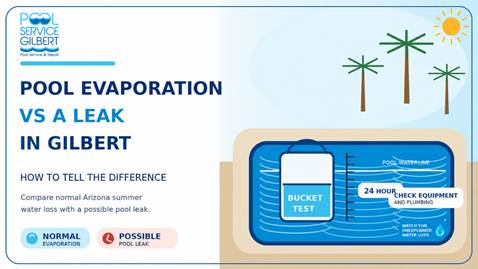
The bucket test compares water loss from the pool with evaporation from a smaller container under the same conditions.

Turn off automatic filling equipment and choose a 24 hour period without rain or unusually strong wind. Fill a bucket with pool water and place it on a pool step so most of the bucket is submerged. Mark the water level inside the bucket and mark the pool level outside it.

Check both marks the next day. If the pool and bucket lost roughly the same amount, evaporation is the likely cause. If the pool dropped noticeably farther, a leak may be present.

The Environmental Protection Agency recommends this test as a practical first check. It does not locate a leak, but it helps show whether professional inspection is justified.

Watch for Other Leak Warning Signs

Water loss is rarely the only clue. Look around the pool, equipment pad and nearby ground for changes that do not match normal summer conditions.

Possible signs include damp soil that never dries, cracks around the deck, loose tile, air entering the pump basket or water collecting near plumbing connections. A pool that loses more water while the pump runs may have a pressure side plumbing issue.

Automatic water levelers can hide a problem because they replace lost water without drawing attention to the falling level. An unexplained increase in the water bill may be the first warning.

Check Simple Causes First

Not every unusual drop comes from buried plumbing. Inspect the filter equipment for leaking valves, loose fittings and water around the pump. Check the backwash line to make sure water is not escaping when the system runs.

Look at the cleaner hose, skimmer area, light fixture and visible tile line. Water may also be blown out of a raised spa or decorative feature during windy weather. A busy swimming weekend can produce temporary loss through splashing.

Do not keep topping up a pool indefinitely when the cause remains unexplained. Fresh water changes the chemical balance and can make regular maintenance more difficult.

Why Prompt Repair Matters

A small leak can become more expensive when ignored. Escaping water may wash away soil, affect the deck or create problems around buried lines. Low water can also interfere with skimming and allow the pump to draw air.

The Town of Gilbert encourages residents to investigate suspected leaks as part of local water conservation. Finding the problem early protects the property and avoids wasting treated water during the hottest part of the year.

Call Pool Service Gilbert for Pool Leak Help

Pool Service Gilbert provides pool plumbing repair, weekly cleaning, filter service and equipment inspection throughout Gilbert, Chandler, Mesa, Tempe, Ahwatukee and Phoenix. If your pool is losing more water than summer evaporation can explain, call 480-748-3022 for a professional evaluation and free quote before a small leak turns into a larger repair.

References

Pool Service Gilbert: Plumbing Leak Services

Pool Service Gilbert: Weekly Pool Cleaning

Arizona Department of Water Resources: Pools and Spas

U.S. Environmental Protection Agency: Jump Into Pool Water Efficiency

Town of Gilbert: How to Find and Fix Leaks

sump pump failure
Written by webtechs

Sump Pump Failure

sump pump failure

If you are searching for “sump pump failure“, Pool Service Gilbert is here to help you troubleshoot the problem! Below are five warning signs that your sump pump is failing and when a replacement is necessary.

Signs You May Have Sump Pump Failure

These five warning signs are going to let you know it’s time to replace your sump pump:

  1. Sump pump will not shut off
  2. Sump pump easily clogs
  3. Irregular cycling
  4. Wear and tear
  5. Constant noise

Sump Pump Will Not Shut Off

Regardless of weather conditions, when your pump is continuously running it is a clear sign that something is off with the pump. Unreasonable strain is placed on the pump’s motor when the pump continues to run even after all of the water is emptied out the basin. Water assists in cooling the pump down, so when it continues to run without water, it is going to overheat quickly. When the issue remains, it can cause untimely failure of the pump. Continual running can be caused by a assortment of causes, including wrong pump size or a stuck float switch in the on position, among others.

Sump Pump Clogs

Taking on the source of incoming debris is the best way to protect the pump from clogging. Try securing your basin using an airtight lid to hinder any leaves, sticks or even small animals from falling down into the pump’s pit area. When water is delivered to the pump via downspout, is it suggested to install a screen to prevent anything from getting into the basin and damaging the pit. When you must get bacterial iron out of the water supply, you might have to shock chlorinate your well water.

Erratic Cycling

Whenever a pump is cycling intermittently or taking longer than usual to empty the water from its basin, it might be time to have the pump inspected via a professional. Any type of continual bursts of activity usually indicates a check valve failure. Typically, loose wiring is the culprit when erratic cycling happens. If the pump suddenly shuts off, turn off its power source, then disconnect it. Check the area to be sure there aren’t any visible loose wires.

Wear And Tear

Whereas common sense indicates an older sump pump is more possible to fail than a new one, a lot of pool owners wait way too long to actually replace it. It is very easy to overlook how long you have had the sump pump when it’s never created problems for you. Don’t make the mistake of postponing routine maintenance inspections. Regardless of how well it operates, when the pump is approaching ten years plus, it’s suggested to replace the pump before it fails. A replacement is a lot less costly than having to deal with any type of water damage.

Constant Noise

An unusually noisy motor is a clear indication that the motor is coming to it end. If you happen to have an older plastic pump, then it’s time to update your system. These newer pumps are a lot more reliable and require less maintenance to keep them running. Newer cast-iron pumps are also less probable to overheat. With the new pump, it is possible for replacing the failing motor without buying a replacement pump. Pedestal sump pumps have motors that sit above the basin, making a motor replacement a very easy process.

Pool Service In Gilbert, AZ

Pool Service Gilbert is a family-owned and operated business that has been serving the valley since 2004. We offer reliable and affordable pool services, including repairs, replacement, equipment installations and more! Our service area includes Ahwatukee, Chandler, Gilbert, Mesa, Phoenix and Tempe, Arizona. Contact us right here for your upcoming pool service needs! Call us at 480-748-3022 for more information.