How Much Does It Cost To Replace A Pool Pump?
Written by webtechs

Pool Pump Cost (2024)

How Much Does It Cost To Replace A Pool Pump?

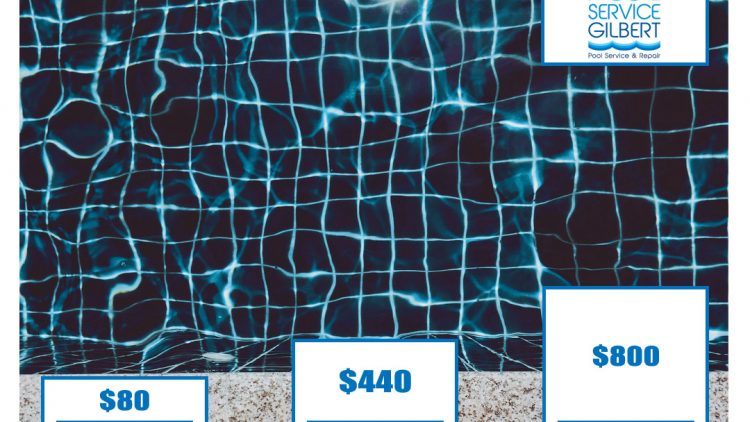
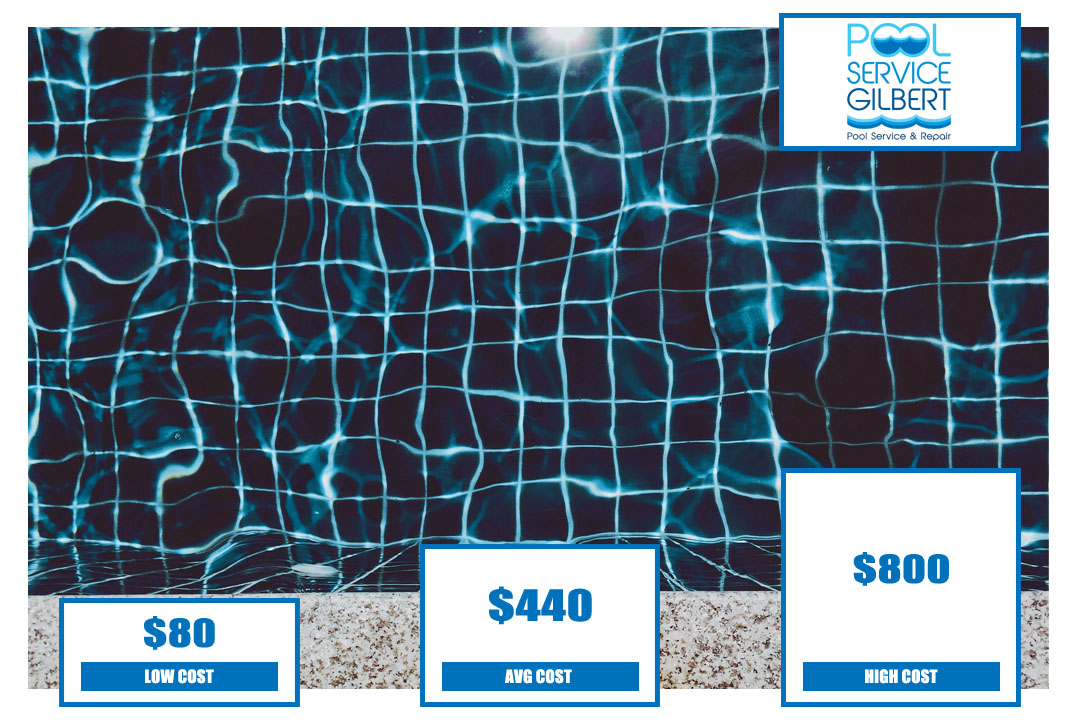
A pool pump replacement costs an average of $440, with prices ranging from $80-$800. These price estimates do include the cost of labor, according to improvenet.com. 

Pool Pump Replacement Cost

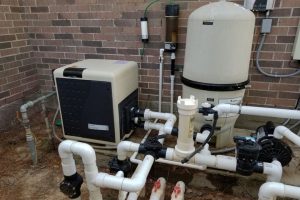
Owning a pool involves routine maintenance, comprising of repairing the pool liner, repairing the pool heater, and replacing the pool pump. Your pool pump is a vital component of the pool’s filtration system, and as time goes on, they wear out. On average, higher quality pool pumps should be replaced every 8 to twelve years. If you do it yourself it includes the cost of the replacement pool pump, which could run from $150 to $800 or more subject to the kind of pump. When you hire a professional, the cost includes the cost of labor, that is an added $80 to $200.

How Much Does It Cost To Replace A Pool Pump?

Signs You Need To Replace A Pump

There are five obvious signs to look for when it comes to pool pump repairs, listed above. Rumbling noises should be noticed right away. Excessively-vibrating pumps will create sometimes loud and consistent noises. The most common reason for the noise is a pump coming loose or dislodged. Get this issue fixed right away before it becomes a larger problem. The good news for pool owners is this issue won’t require a costly repair.

Grinding sounds can be confused as rumbling at first. But, there is a big difference between these various sounds. Grinding means your pump needs new bearings. Older bearings can lead to motor overheating. Bearings are typically cheap, but replacing them requires opening the pump. This is a task best left to the pool service professionals.

Even a well-maintained and routinely checked pump will wear out over time. These pool pumps can last between 8 to 12 years. However, many pool owners may notice failure at an earlier age. If your pump is getting up their in age, it’s time to start thinking about repairs and/or replacement.

Bubbles in your pool water may seem innocent, but this is not a good sign at all. Bubbles are a clear indication of an air leak in your pump. Dirty water can result from an air leak and can pose numerous health hazards. Have a pool cleaning service check this issue out immediately.

When Is It Time To Replace A Pool Pump?

There are two elements in pool pumps: the pump device and the motor device. Either one could fail and will need your attention. indicators that it’s time to replace your pool pump comprise of:

  • Total motor failure
  • Loud noises coming from the motor
  • The pump isn’t pumping water, or the pump is leaking

Pool Pump Motor Replacement Cost

If the pool pump is somewhat new (ten years old or less) and the exterior of the pump does not show indications of degradation, just replacing the motor could be a good idea. When the pump has some age to it, and the motor replacement parts are exhausting to track down or when the cost of the motor replacement is higher than 75% of the cost of a total pump replacement, total pump replacement is the route you should take.

If the pump is still under its warranty, then totally replace the pump. Motor replacement is a lot less expensive than replacing the entire pool pump. Replacing the pump yourself costs somewhere between $25 to $200, whereas hiring a professional could cost an additional $40 to $100.

Pool-Pump-Repair-Near-Me-Gilbert-AZ

Pool Pump Replacement In Gilbert, AZ

Pool Service Gilbert is a family-owned and operated business that has been serving the valley since 2004. We offer reliable and affordable pool services, including repairs, replacement, equipment installations and more! Our service area includes Ahwatukee, Chandler, Gilbert, Mesa, Phoenix and Tempe, Arizona. Contact us right here for your upcoming pool service needs! Call us at 480-748-3022 for more information.

HOW MUCH DOES A POOL COST IN ARIZONA?
Written by webtechs

Pool Prices In Arizona (2024)

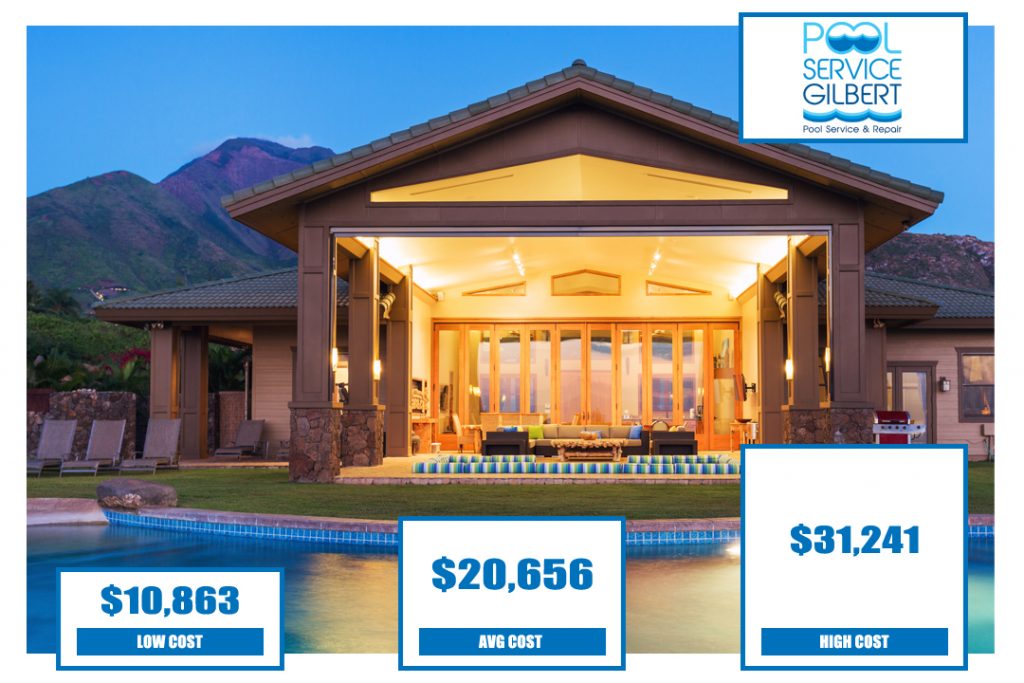
The average price to install an inground pool in Arizona is $20,656. Costs will range from $10,863-$31,241 in Phoenix, AZ, according to Homeadvisor.

However, there are several different factors that could influence overall costs.

How Much Does A Pool Cost?

Inground pools will generally cost more to install than an above-ground pool. Above-ground models will cost anywhere from $700-$3,600. Custom pools will, of course, cost more than any other models, with prices going upwards of $100,000. Always compare quotes from local pool suppliers to receive the best deal possible.

Pool Cost Factors

The first factor that could inflate the bottom line is exactly how much it will cost for construction of the pool area. That very much depends on the type of material the installers are working with. For instance, fiberglass will cost between $20,000-$37,000, while concrete construction costs anywhere from $35,000-$65,000.

Building an above-ground pool can be considerably cheaper than an inground model. The building of the above-ground pool will run between $1,500-$15,000. The above ground pools will not add the same value to your home as an inground pool will, though. Plus most homeowners prefer the look of inground pools.

Perhaps you are still thinking about whether you should invest in a lap or endless pool. With labor costs, lap pools run between $40,000-$60,000. Endless pools tend to be much shorter than lap pools, and cost approximately $23,000-$40,000.

Inground Pool Costs In Arizona

Total costs for inground pools will very much depend on materials used for construction. These are typical prices based on material:

  • Concrete: $50,000-$100,000
  • Vinyl Liner: $25,000-$65,000
  • Fiberglass: $40,000-$85,000

Saltwater Vs Chlorine Pool Costs

Saltwater pools come with heavy upfront costs, including the installation of a saltwater generator. This costs between $400-$1,800. Installation fees could tack on an additional $400. Yearly salt and chemical costs could total $100. Meanwhile, chlorine pools could require up to $800 per year in chemical costs.

Pool Costs By Location

Are you looking to compare pool costs in Phoenix, Arizona to other big cities in the country? Here are a few average costs:

  • Miami, Florida: $17,550-$38,600
  • Dallas, Texas: $12,000-$28,200
  • New York, New York: $17,000-$33,700
  • San Diego, California: $15,300-$36,900
  • Las Vegas, Nevada: $22,300-$135,000

All average costs are according to Home Advisor.

How Much Does A Pool Cleaning Service Cost?

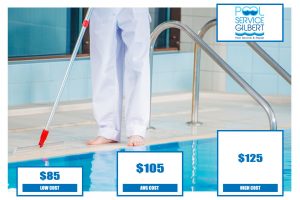
The average pool service costs in the Phoenix, AZ area range from $85 to $125 per month. Typically, any pool owner can expect to pay around $105 per month for cleaning services. Use this post to help determine a budget for any upcoming pool services you may need in the future.

How Much Does Pool Service Cost in Phoenix Arizona

Pool Service Phoenix

Pool Service Gilbert is a family-owned and operated business that has been serving the valley since 2004. We offer reliable and affordable pool services, including repairs, equipment installations and more! Our service area includes Ahwatukee, Chandler, Gilbert, Mesa, Phoenix and Tempe, Arizona. Contact us right here for your upcoming pool service needs.

More Articles About Pool Care

How to Prepare Your Gilbert, Arizona Pool for Winter
Written by webtechs

Weekly Pool Maintenance Ideas

How to Prepare Your Gilbert, Arizona Pool for Winter
Routine pool maintenance is crucial in keeping a pool healthy. This article will provide you with checklists and instructions for pool maintenance tasks.

Weekly pool maintenance is crucial to keep your pool water clean, clear, and safe for swimming. Regular maintenance helps prevent issues such as algae growth, cloudy water, and the buildup of debris. Here is a general guide to weekly pool maintenance tasks:

  1. Skim the Surface:
    • Use a skimmer net to remove leaves, debris, and any floating objects from the water’s surface. This helps prevent the debris from sinking to the bottom and causing water quality issues.
  2. Empty Skimmer and Pump Baskets:
    • Clean out the skimmer basket and pump basket to ensure proper water flow and circulation. This helps the filtration system operate efficiently.
  3. Brush the Walls and Floor:
    • Use a pool brush to scrub the walls and floor of the pool to prevent the buildup of algae and other contaminants. Pay attention to areas with low circulation, such as steps and corners.
  4. Vacuum the Pool:
    • Depending on the pool type, use a manual vacuum or an automatic pool cleaner to remove debris and sediment from the pool floor. Vacuuming helps maintain water clarity and cleanliness.
  5. Check and Adjust Water Chemistry:
    • Test the pool water using a test kit to check the pH, chlorine levels, alkalinity, and calcium hardness. Adjust the chemical levels as needed to maintain proper water balance. Ideal levels are:
      • pH: 7.2 to 7.6
      • Free chlorine: 1.0 to 3.0 ppm
      • Total alkalinity: 80 to 120 ppm
      • Calcium hardness: 200 to 400 ppm
  6. Shock the Pool:
    • Regularly shock the pool with a chlorine shock treatment to kill bacteria, break down contaminants, and eliminate chloramines. Follow the manufacturer’s instructions for the appropriate shock treatment for your pool size.
  7. Inspect the Pool Equipment:
    • Check the pool equipment, including the pump, filter, and heater, for any signs of damage or leaks. Ensure that all equipment is functioning properly.
  8. Monitor Water Level:
    • Maintain the appropriate water level in the pool. If the water level is too low, it can strain the pump, potentially causing damage. If it’s too high, skimmers may not function effectively.
  9. Backwash the Filter:
    • If you have a sand or DE (diatomaceous earth) filter, backwash it to remove trapped debris and maintain optimal filtration. Follow the manufacturer’s guidelines for backwashing.
  10. Inspect and Clean the Pool Deck:
    • Check the pool deck for any debris or hazards. Clean the deck and surrounding areas to prevent dirt and debris from entering the pool.
  11. Inspect Pool Cover:
    • If you have a pool cover, inspect it for damage and clean it if necessary. A clean cover helps prevent debris from entering the pool.
  12. Keep an Eye on Water Level:
    • Ensure that the water level in the pool is maintained at the appropriate level. Add water if needed to prevent damage to the pump and skimmer.

Remember that the specific tasks may vary based on factors such as the pool type, climate, and local conditions. Regular, proactive maintenance is key to preventing larger issues and ensuring a clean and enjoyable swimming experience.

Pool Cleaning

Even though you may already possess tools like pool brushes, vacuums and skimmer nets, you will still need to physically clean the pool. The pool water needs to be skimmed for any debris, plus the surface should be brushed to prevent algae growth. The bottom of the pool should be vacuumed to pick up any debris that may be present. Automated pool cleaning systems can ease the burden of pool owners, but regular skimming and brushing are still necessary.

Water Circulation

Good water circulation can make life very difficult for algae and other contaminants. Pool pumps and filter systems can keep the pool water from becoming stagnant and promoting algae growth. Pool pumps should always run from 10-12 hours per day. The more the water circulates, the cleaner the water will be, overall. Backwashing your filter when the pressure is high will help improve circulation, as well.

Water Chemistry

Maintaining the proper water chemical balance is just as important as any physical cleaning tasks. The word balance is especially important, since dumping lots of chemicals into the pool will not be effective. The pH of any pool water should be between 7.4-7.6. The alkalinity, meanwhile, should be between 80-120 ppm. Sanitizer levels will differ based on applicable codes and pool types. Shocking the pool at night will certainly aid the circulation process.

Weekly Maintenance Checklist

  • Check the water for clarity/color change.
  • Remove any debris from the pool area.
  • Empty skimmer and pump strainer baskets.
  • Vacuum pool or run pool cleaner.
  • Check filter pressure and backwash.
  • Check water level.
  • Test the salt concentration level.
  • Test the free chlorine level.
  • Test the pH level, adjust if necessary.

Monthly Maintenance Checklist

  • Test the Total Alkalinity (TA).
  • Test the Stabilizer or Cyanuric Acid level.
  • Test the Total Dissolved Solids level.
  • Test the Calcium Hardness level.
  • Test to see if hard materials are present, such as copper or iron.

Yearly Maintenance Checklist

  • Perform proper closing or winterizing steps, if needed.
  • Clean the salt cell and store inside.
  • Perform proper opening steps in the spring.

Pool Maintenance In Gilbert, AZ

Pool Service Gilbert is a family-owned and operated business that has been serving the valley since 2004. We offer reliable and affordable pool services, including repairs, equipment installations and more! Our service area includes Ahwatukee, Chandler, Gilbert, Mesa, Phoenix and Tempe, Arizona. Contact us right here for your upcoming pool service needs!

More Articles About Pool Care

Sump pump replacement cost
Written by webtechs

Sump Pump Replacement Costs 2023

Sump pump replacement cost
Costs, on average, to replace your sump pump is $300 to $750, although it can range anyplace from $110 to $1,000. The cost basically is subject to the cost of the unit and the company you hire to replace it.

How Much Does Replacing a Sump Pump Cost?

A sump pump replacement is going to cost less than a new installation, at around $300 to $750. On the average, you are going to pay $500. Since the process to replace it isn’t as time-consuming or labor-intensive as a new installation. There’s no digging needed; you just have to take the old pump out and then install the new one.

How Do I Know When It’s Time for a Replacement?

When the motor is failing and/or your pump is over ten years old, it’s time to replace it. If you’ve noticed that your pump is constantly running or cycling on and off, these could also be an indication that your sump pump is going bad.

Sump Pump Replacement Cost Explanation

If your sump pump is failing, it’s time to purchase a new one—but going over budget clearly is not what you want. It can be beneficial to acquaint yourself with the various aspects that impact replacement costs, so you’ll know what you’re going to expect.

Costs for Labor

Professionals typically bill $45 to $200 each hour for the installation of a sump pump. Replacements only take about an hour or so (conversely, new installs can take up to 2 to 4 hours).

Type of Pump

Pedestal pumps are around $60 – $170. Submersible pumps are around $100 – $400. Submersible pumps are more costly but have more powerful. You can assume to pay more for submersible pumps repairs.

How to Save Money on Your Sump Pump Replacement

The best thing you could do to save you money on a replacement is to thoroughly examine and maintain your sump pump during the year. That way, your pump is going to last as long as it can. It’s particularly important to guarantee your pump is in good working order throughout storm seasons, prior to predicted heavy rainfall, and prior to the snow melting. Here are some routine maintenance tips for taking care of your sump pump:

  • Verify the pump’s position. Fluctuations can cause a sump pump to shift positions, so you should routinely check to make sure that your pump is sitting in the correct position.
  • Test the pump. Pour water into the pit to verify that your pump is running correctly. Do this multiple times over a year.
  • Clean the pump. Remove any debris and verify to be sure the inlet screen (located near the pump’s bottom) isn’t blocked. Do this every 3 to 4 months.
  • Acquire a filter. The filter is going to help keep things out of the pump, increasing its lifespan. Utilizing a piece of screen is a simple solution for keeping debris from getting inside the pit.
  • Hire a professional. Think about hiring a pump professional in your area to perform a yearly maintenance checkup. The contractor is going to check to be sure that the pump empties properly and that the float is working correctly.

Pool Light Replacement In Gilbert, AZ

Pool Service Gilbert is a family-owned and operated business that has been serving the valley since 2004. We offer reliable and affordable pool services, including repairs, replacement, equipment installations and more! Our service area includes Ahwatukee, Chandler, Gilbert, Mesa, Phoenix and Tempe, Arizona. Contact us right here for your upcoming pool service needs! Call us at 480-748-3022 for more information.

How To Clean Pool Tile With Vinegar
Written by webtechs

What Size Sand Filter Do I Need?

How To Clean Pool Tile With Vinegar

The size of the sand filter you need for your swimming pool depends on several factors, including the pool’s size, flow rate, and the specific requirements of your filtration system. Sand filters are commonly used for residential pools and are available in various sizes. Here’s how to determine the appropriate size for your pool:

  1. Calculate Pool Gallons: First, you need to calculate the total number of gallons of water in your pool. To do this, measure the pool’s length, width, and average depth (or depth at various points) in feet and use the following formula:

    Pool Gallons = Length (ft) × Width (ft) × Average Depth (ft) × 7.48

    This formula gives you the approximate number of gallons in your pool.

  2. Determine Desired Flow Rate: The flow rate is the rate at which water circulates through the filter. A common guideline is to have a flow rate of 2 gallons per minute (gpm) per 10,000 gallons of pool water. You can calculate the desired flow rate as follows:

    Desired Flow Rate (gpm) = (Pool Gallons / 10,000) × 2 gpm

    This gives you the flow rate required for your pool.

  3. Choose the Right Sand Filter: Sand filters are rated by their flow rate capacity, typically in gallons per minute (gpm). Choose a sand filter that can handle your calculated flow rate. It’s a good idea to select a filter with a slightly higher flow rate capacity to ensure efficient filtration.

  4. Check the Manufacturer’s Recommendations: Always refer to the manufacturer’s specifications and recommendations for the sand filter you are considering. Manufacturers provide guidance on the filter’s maximum flow rate capacity, which should match or exceed your pool’s calculated flow rate.

Keep in mind that sand filters come in various sizes, so you’ll want to choose one that aligns with the size of your pool and the required flow rate. Additionally, consider the quality and durability of the filter, as well as any specific features that may be important to you, such as ease of maintenance.

If your pool has special features like waterfalls, fountains, or a spa, you may need a larger filter or a multi-speed pump to accommodate the additional flow requirements.

Lastly, for the best results and to ensure proper filtration, it’s essential to maintain and backwash your sand filter regularly as recommended by the manufacturer and based on the water quality and usage of your pool. Proper maintenance will help your filter operate efficiently and keep your pool water clean and clear.

Pool Service Gilbert In Arizona

Pool Service Gilbert is a family-owned and operated business that has been serving the valley since 2004. We offer reliable and affordable pool services, including repairs, equipment installations and more! Our service area includes Ahwatukee, Chandler, Gilbert, Mesa, Phoenix and Tempe, Arizona. Contact us right here for your upcoming pool service needs.

More Articles About Pool Care

HOW MUCH DOES A POOL COST IN ARIZONA?
Written by webtechs

Average Pool Cost In Arizona 2023

The average price to install an inground pool in Arizona is $20,656 in 2023. Costs will range from $10,863-$31,241 in Phoenix, AZ.

How Much Does A Pool Cost?

Inground pools will generally cost more to install than an above-ground pool. Above-ground models will cost anywhere from $700-$3,600. Custom pools will, of course, cost more than any other models, with prices going upwards of $100,000. Always compare quotes from local pool suppliers to receive the best deal possible.

Pool Cost Factors

The first factor that could inflate the bottom line is exactly how much it will cost for construction of the pool area. That very much depends on the type of material the installers are working with. For instance, fiberglass will cost between $20,000-$37,000, while concrete construction costs anywhere from $35,000-$65,000.

Building an above-ground pool can be considerably cheaper than an inground model. The building of the above-ground pool will run between $1,500-$15,000. The above ground pools will not add the same value to your home as an inground pool will, though. Plus most homeowners prefer the look of inground pools.

Perhaps you are still thinking about whether you should invest in a lap or endless pool. With labor costs, lap pools run between $40,000-$60,000. Endless pools tend to be much shorter than lap pools, and cost approximately $23,000-$40,000.

Inground Pool Costs In Arizona

Total costs for inground pools will very much depend on materials used for construction. These are typical prices based on material:

  • Concrete: $50,000-$100,000
  • Vinyl Liner: $25,000-$65,000
  • Fiberglass: $40,000-$85,000

Saltwater Vs Chlorine Pool Costs

Saltwater pools come with heavy upfront costs, including the installation of a saltwater generator. This costs between $400-$1,800. Installation fees could tack on an additional $400. Yearly salt and chemical costs could total $100. Meanwhile, chlorine pools could require up to $800 per year in chemical costs.

Pool Costs By Location

Are you looking to compare pool costs in Phoenix, Arizona to other big cities in the country? Here are a few average costs:

  • Miami, Florida: $17,550-$38,600
  • Dallas, Texas: $12,000-$28,200
  • New York, New York: $17,000-$33,700
  • San Diego, California: $15,300-$36,900
  • Las Vegas, Nevada: $22,300-$135,000

All average costs are according to Home Advisor.

How Much Does A Pool Cleaning Service Cost?

The average pool service costs in the Phoenix, AZ area range from $85 to $125 per month. Typically, any pool owner can expect to pay around $105 per month for cleaning services. Use this post to help determine a budget for any upcoming pool services you may need in the future.

How Much Does Pool Service Cost in Phoenix Arizona

Pool Service Phoenix

Pool Service Gilbert is a family-owned and operated business that has been serving the valley since 2004. We offer reliable and affordable pool services, including repairs, equipment installations and more! Our service area includes Ahwatukee, Chandler, Gilbert, Mesa, Phoenix and Tempe, Arizona. Contact us right here for your upcoming pool service needs.

More Articles About Pool Care

Written by webtechs

Acid Wash Pool Costs 2023

Acid washing a swimming pool typically costs between $525 and $1,775 on average, or $0.53 per square foot in the United States in 2023.

The cost of an acid wash for a swimming pool can vary widely depending on several factors, including the size of the pool, the extent of staining or discoloration, the geographic location, and the specific services offered by the pool maintenance or cleaning company. Here are some cost-related considerations for an acid pool wash:

  1. Size of the Pool: The primary factor that influences the cost of an acid wash is the size of the pool. Larger pools will typically require more acid and more labor, which can drive up the cost. Pool professionals often charge per square foot or per linear foot of the pool’s surface area.

  2. Severity of Staining: If your pool has heavy staining, algae growth, or other stubborn discolorations, it may require more extensive and time-consuming acid washing. This can increase the cost compared to a simple surface clean.

  3. Geographic Location: The cost of services, including acid pool washing, can vary significantly depending on your location. In areas with a high cost of living or where specialized services are in high demand, you can expect higher prices.

  4. Additional Services: Some pool maintenance companies may include acid washing as part of a comprehensive pool cleaning and maintenance package, while others may charge separately for this service. The overall cost can depend on what other services are included.

  5. Preparation and Cleanup: The process of acid washing involves draining the pool, applying the acid solution, scrubbing, and then neutralizing and disposing of the acid. The cost may include these preparation and cleanup steps.

  6. Repairs and Replastering: In some cases, acid washing can reveal the need for pool repairs or even re-plastering. These additional services will increase the overall cost.

  7. Frequency: Acid washing is not typically done as part of regular pool maintenance and is usually reserved for more severe cases of staining and discoloration. The frequency with which you require acid washing will affect the overall cost.

How Much Does A Pool Cleaning Service Cost?

The average pool service costs in the Phoenix, AZ area range from $85 to $125 per month. Typically, any pool owner can expect to pay around $105 per month for cleaning services. Use this post to help determine a budget for any upcoming pool services you may need in the future.

How Much Does Pool Service Cost in Phoenix Arizona

Pool Service Phoenix

Pool Service Gilbert is a family-owned and operated business that has been serving the valley since 2004. We offer reliable and affordable pool services, including repairs, equipment installations and more! Our service area includes Ahwatukee, Chandler, Gilbert, Mesa, Phoenix and Tempe, Arizona. Contact us right here for your upcoming pool service needs.

More Articles About Pool Care

Average Pool Size In Gallons
Written by webtechs

Average Pool Size Phoenix

Common Pool Problems

The average pool volume can vary widely depending on the size and type of pool. Residential swimming pools come in various shapes and sizes, and their volume is typically measured in gallons or cubic meters. Here are some general guidelines for different types of residential pools:

  1. Small Above-Ground Pools: These pools are typically the smallest and can hold anywhere from 1,000 to 5,000 gallons (3,785 to 18,927 liters) of water. The volume depends on the pool’s dimensions and depth.
  2. Medium-Sized In-Ground Pools: A medium-sized in-ground pool, commonly found in residential settings, can have a volume of 10,000 to 20,000 gallons (37,854 to 75,708 liters). The exact volume depends on the pool’s shape, dimensions, and depth.
  3. Large In-Ground Pools: Larger in-ground pools, often found in larger properties or luxury homes, can hold 25,000 gallons (94,635 liters) or more. Some exceptionally large pools can exceed 50,000 gallons (189,270 liters).

It’s important to note that these are general guidelines, and the actual volume of a pool can vary based on its specific dimensions and depth. To calculate the exact volume of a pool, you can use the following formula:

Volume (in gallons) = Length (in feet) × Width (in feet) × Average Depth (in feet) × 7.48052

Or, if you prefer to use meters:

Volume (in cubic meters) = Length (in meters) × Width (in meters) × Average Depth (in meters)

Remember that the average depth is used in these calculations because most residential pools have a sloped floor, with the deepest part typically in the center. To get an accurate measurement, measure the depth at several points and calculate the average.

If you’re unsure about the volume of your pool or need precise measurements for maintenance or chemical treatments, it’s a good idea to consult with a professional pool technician or use a pool volume calculator designed for this purpose.

Pool Service Gilbert

Pool Service Gilbert is a family-owned and operated business that has been serving the valley since 2004. We offer reliable and affordable pool services, including cleaning, replacement, repairs, equipment installations and more! Our service area includes Ahwatukee, Chandler, Gilbert, Mesa, Phoenix and Tempe, Arizona. Contact us right here for your upcoming pool service needs!

More Articles About Pool Care

Pool Light Replacement Cost
Written by webtechs

Pool Light Replacement Cost 2023

Pool Light Replacement Cost

The average pool light replacement cost $625. Pool light repairs prices are a lot more budget friendly at $65 to $150 each. Simply replacing the bulbs is $20 to $100 for each one subject to type and function. Colorful LED bulbs are most costly but last longer than other types of bulbs. If you’re thinking about getting an inground pool, you are most likely also considering installing underwater pool lighting. Because we work with a lot of homeowners throughout Gilbert, Arizona and surrounding areas each year, we have the chance to answer a lot of questions concerning pool lighting. In this post, it is going to cover some common inground pool lighting questions that we receive day to day.

What should I know about pool lights?

Lighting your pool allows you to swim at nighttime with single or multi-colored ambient light. LED pool lighting enables you to change colors with ease, possibly with your smart phone. In-pool lighting is required to be installed during the pools construction. Small LED lights cost around $700–$900 installed, and fiber optics cost about $1,300–$1,700. The only necessary maintenance is bulb replacement.

Why should I light my pool?

First and foremost, lighting your pool is going to allow you to fully take advantage of your pool throughout day and night. A lot of people find nighttime swimming soothing and relaxing, but it’s just not the same without the ambiance of reflective light that underwater lights provide. Lighting your inground pool also gives homeowners peace of mind when overseeing children swim at night because adds improved visibility throughout the whole pool.

Are pool lights required to be installed during construction, or can I add them later?

Many pool accessories can be added at a later date, but pool lights don’t offer that versatility…not without significant renovation work. It is recommended if you’re in the slightest considering light your pool, it’s best to have it installed during the pool’s construction.

 How many lights am I going to need?

It subject to the type of light, it is suggested that one light, at the minimum, is going to adequately light up a pool up to thirty foot long. Pools longer than thirty feet are going to require two lights. Take heed that this is the smallest amount, most people end up getting two lights installed, and some even require to install three lights on larger pools. As of this post, full sized LED pool lights, like those that are usually installed in vinyl lined or concrete pools, typically cost between $1,000 and $1,500 installed.

  • Smaller LED lights usually cost between $700 and $900 installed.
  • Fiber optic pool lighting is typically around $1,300 to $1,700 installed.
  • Full sized incandescent pool lighting is usually around $450 to $650.

 What is the required maintenance?

The only maintenance required for any pool light is replacing the bulb. Regardless of the kind of light, you should never have the need to lower the pool’s water level for replacing the bulb. In many cases, it is simply loosening a single screw, pulling the bulb housing out of the water and replacing the bulb. The replacing only takes 5 to 10 minutes. Other types of lights, nevertheless, require that the entire housing be replaced, in which takes more time but still not a huge undertaking, especially bearing in mind the average bulb lasts for years and years. Replacing fiber optic bulbs is very easy as you just remove the box cover, located on or close to the patio, and put in a new bulb. Bulb replacement prices at the time of this post are as follows:

  • Larger LED $450 to $650
  • Smaller LED $50 to $350 subject to the model
  • Fiber optics $20 to $60
  • Incandescents $30 to $70

 Are pool lights safe?

Short answer, absolutely, they are extremely safe, so long as they are installed in accordance to manufacturer’s specifications and local building code compliant. Today’s pool lights, correctly installed, are basically risk free.

Pool Light Replacement In Gilbert, AZ

Pool Service Gilbert is a family-owned and operated business that has been serving the valley since 2004. We offer reliable and affordable pool services, including repairs, replacement, equipment installations and more! Our service area includes Ahwatukee, Chandler, Gilbert, Mesa, Phoenix and Tempe, Arizona. Contact us right here for your upcoming pool service needs! Call us at 480-748-3022 for more information.

Salt Water Pool Conversion
Written by webtechs

How to Convert Your Pool to Salt Water

Salt Water Pool Conversion

Even though saltwater pools have been around since the 70’s, their popularity has increased rapidly in the last few years. In large part to their decreased cost to maintain. They’re also gentler on your skin, hair, and eyes, and you’ve most likely heard salt water is more healthy than chlorine, also.

Perhaps you’ve been mulling over a saltwater pool conversion for taking advantage of all those benefits. However, what a hassle that conversion would be, right? The conversion process is somewhat simple, so when you’re thinking of doing it yourself, don’t fret.

Why Do a Saltwater Pool Conversion?

Chlorinated pool water can be hard on people due to chemicals called chloramines. These composites are produced when the chlorine in your pool water comes into contact with things such as sweat and urine, and they can be detrimental in two ways.

First, they are not useful for sanitizing the water the way chlorine does, so water cleaning is constrained. Second, they can cause irritability of the eyes, skin, and lungs. Powerful chloramines can accumulate in the air surrounding a pool, particularly indoor pools. When the air is packed with these chloramines, it could even cause coughing or lead to an asthma attack.

Repeated exposure to chlorine might even cause some individuals to develop an allergy or sensitivity to it. And for those that already have a sensitivity to it, swimming in a chlorine pool could cause hives, rashes, and itchy skin outside the simple dryness you might experience from exposure to chlorine.

Should you have respiratory issues, like allergic rhinitis or asthma, you could find your symptoms compounded by regularly swimming in a chlorine pool. When your pool is causing you irritation, a saltwater pool conversion could be just the solution you’re looking for.

On the less extreme side, when you have blonde hair, you’ve most likely have had your hair turn green in a pool disinfected with chlorine. Colored hair can look awesome, however, this most likely isn’t the look you’re striving for. So, what’s the reason it happens? Science!

Similar to a lost penny at the beach turning green, copper in the pool’s water can make your hair green, and higher chlorine levels only worsen it. Chlorine and copper readily bond, coating your hair in green film. Converting to a saltwater pool can lower the probability of green-stained hair.

If you have this problem, make sure to test your pool water for heavy metals. One typical cause of copper in your pool water is using a copper-based algaecide.

Pool Service Gilbert

Pool Service Gilbert is a family-owned and operated business that has been serving the valley since 2004. We offer reliable and affordable pool services, including cleaning, replacement, repairs, equipment installations and more! Our service area includes Ahwatukee, Chandler, Gilbert, Mesa, Phoenix and Tempe, Arizona. Contact us right here for your upcoming pool service needs!

More Articles About Pool Care

1 2 3 4 5 8