How To Fix Cloudy Green Pool Water
Written by webtechs

How To Fix Cloudy Green Pool Water

How To Fix Cloudy Green Pool Water

One of the downsides of owning a pool is when your water turns green. What is this and how can you fix it? Follow our guide below.

Why Is My Pool Water Green?

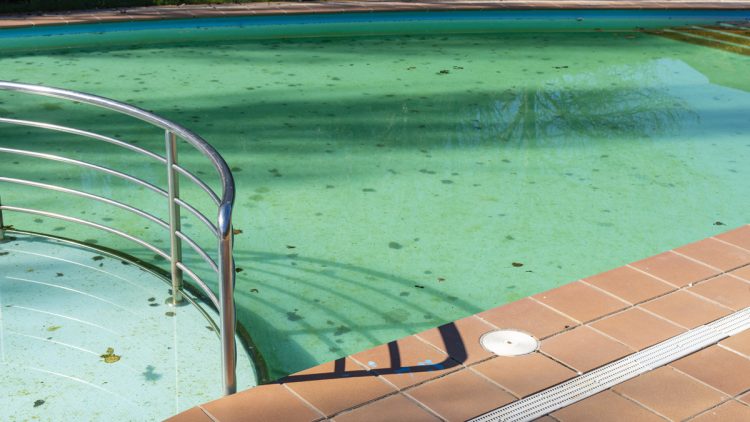
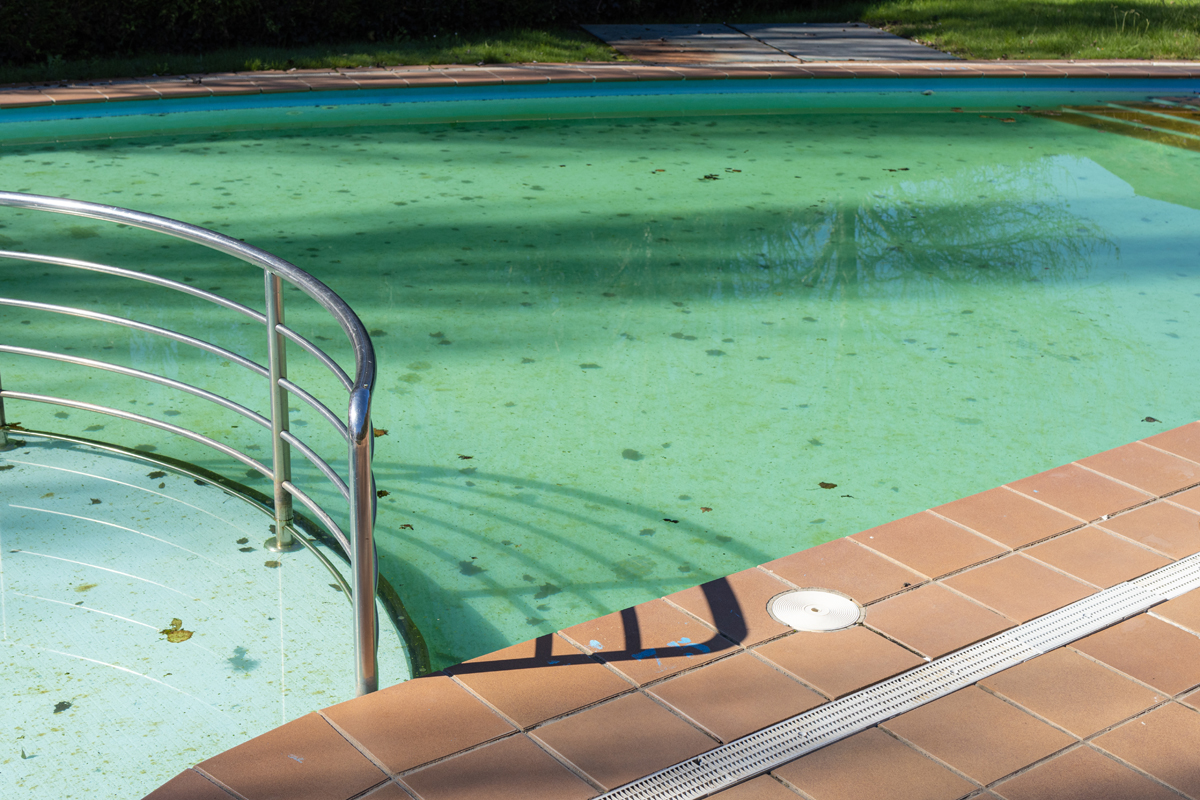
The green discoloration you are seeing in your pool water is a direct result of algae growth. This, unfortunately, can grow and spread very quickly within a pool. On a very hot day, commonplace in Arizona, a small algae infection can escalate quickly. Typically, an imbalance of chlorine is responsible for starting the algae growth.

Whenever the chlorine levels drop for just 24-48 hours, a green pool can be created. Therefore, checking the chlorine levels frequently is essential for any pool owner. The good news is it’s not too late if your pool is already green! Fixing this issue can be quite easy, just make sure to follow our guide to a tee. 

How To Fix A Green Pool

Use the steps below to return your pool to its sparkling blue color:

Step 1. Vacuum The Pool To Waste

  • Begin by removing all algae and debris from your pool area.
  • Vacuum the pool to waste.
  • Do this by setting the valve on the filter to waste.
  • Remove as much algae and sediment from the pool floor as possible.

Step 2. Brush Pool Floor And Walls

  • Use an algae brush for this step instead of your regular pool brush. 
  • A heavy-duty brush will work a lot better against tough algae spots.
  • Use the brush to thoroughly scrub the pool floor, walls and steps. 

Step 3. Test Water For pH And Alkalinity

  • Use a liquid test kit or test strips to test the pH and alkalinity levels. 
  • Record the numbers so you can use them for future reference. 
  • Record the chlorine or sanitizer level, if you’d like. 
  • It’s okay to test the water as the first step in this process.

Step 4. Shock The Pool With Chlorine

  • Shocking the pool with chlorine will eliminate the algae.
  • Pool shock contains high levels of chlorine that will kill algae and sanitize the area.
  • Use a shock that contains at least 70% chlorine.
  • It’s recommended to shock the pool twice.

Step 5. Run The Filter

  • Turn the filter on without turning it off until your water is completely clear. 
  • Run the filter for at least 24 hours to get all the dead algae out of the water.
  • Make sure the shock has fully dissipated. 

Step 6. Test, Balance, Test

  • Once the pool water has completely cleared up, test the water for pH, alkalinity and sanitizer.
  • Add chemicals to balance the water out, if needed.
  • Test it one last time to ensure it is safe to enter the water again. 

Pool Care In Gilbert, AZ

Pool Service Gilbert is a family-owned and operated business that has been serving the valley since 2004. We offer reliable and affordable pool services, including repairs, replacement, equipment installations and more! Our service area includes Ahwatukee, Chandler, Gilbert, Mesa, Phoenix and Tempe, Arizona. Contact us right here for your upcoming pool service needs! Call us at 480-748-3022 for more information.

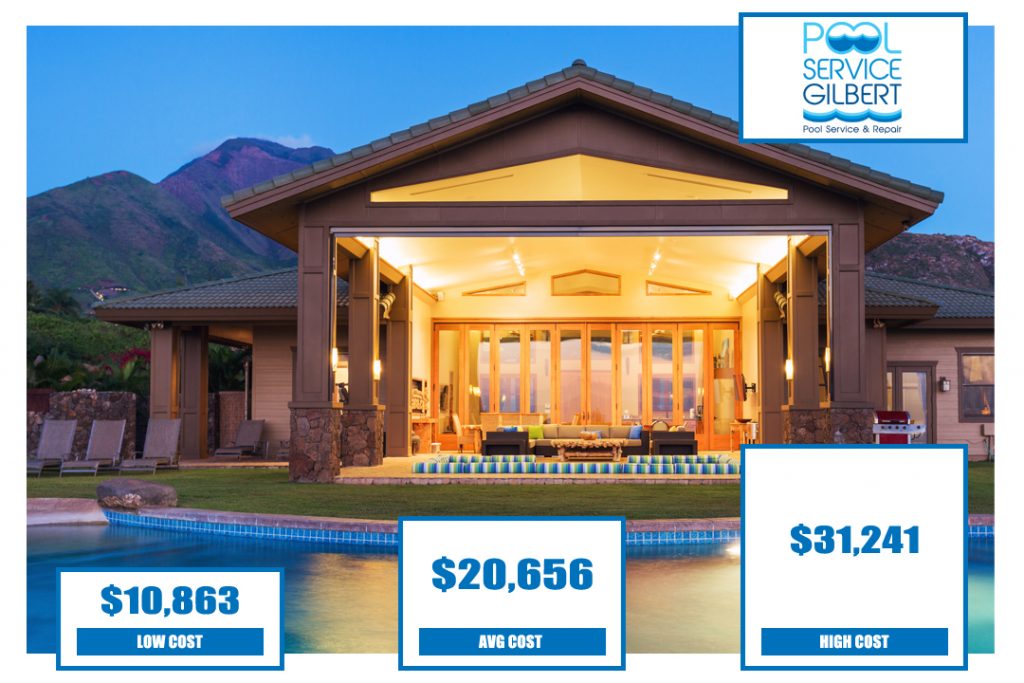
Average Pool Cost In Arizona 2024
Written by webtechs

What Is The Average Pool Size?

Average Pool Cost In Arizona 2024

Standard pool dimensions typically measure 10 x 20-foot, 15 x 30 and 20 x 40, with a depth of 5.5 feet. An area measuring 10 x 20 is considered a small in-ground pool, while 20 x 40 is one of the larger pool sizes, according to PoolsBySignature.

Average Backyard Pool Sizes

A smaller rectangular pool measuring 12 x 24 that reaches 5-feet deep typically holds up to 10,800 gallons of water. A larger 16 x 32-foot pool with 5-feet in depth can hold 19,200 gallons of water. A 20 x 40-foot pool can hold nearly 30,000 gallons of water, on average. 

Of course, not every homeowner will want a rectangular backyard pool. It’s vital to consider the shape of the pool you desire for your home. Shape will usually determine how big or small your pool area will be. This will be determined by the size of your backyard, in most cases.

How Will You Use The Pool?

How you intend to use the pool will also play a role in determining what size works best for you. For instance, if you plan on swimming laps daily, you might want to choose a larger rectangular pool. Do you plan on adding a water slide at any point? All of these determinations must be made prior to picking a pool design. 

If you are simply looking to cool off during the hot Arizona summers, then you do not have to invest in a large pool area. If you are planning on hosting friends and family often, though, it would be wise to choose a larger pool. The size of your family will help you determine the size of the pool. Add ons like water slides or diving boards will also make it obvious that a large area is necessary. 

Pool Designs

The pool design is equally as important as the size. For example, if kids will be swimming in the water, you’ll want to add a shallow area. Figure out how people will get in and out of the pool, as well. Will you be using a ladder to climb in and out of the water or build steps to make it easier to access? 

Shallow steps or even a beach entry point will make it easier to enter and leave the pool area for both kids and anyone with mobility issues. 

Pool Size Limits

Certain factors will undoubtedly limit your ability to build the largest pool possible or with the desired features. Size of the pool is the biggest factor affecting total cost. The larger the pool, the higher the cost. The construction of the area will take longer and more materials will be needed for the project.

Larger pools will also require more maintenance needs. Consider hiring a pool care company for the upkeep. The amount of space in your backyard will determine just how large your pool area will be. 

Pool Care In Gilbert, AZ

Pool Service Gilbert is a family-owned and operated business that has been serving the valley since 2004. We offer reliable and affordable pool services, including repairs, replacement, equipment installations and more! Our service area includes Ahwatukee, Chandler, Gilbert, Mesa, Phoenix and Tempe, Arizona. Contact us right here for your upcoming pool service needs! Call us at 480-748-3022 for more information.

Written by webtechs

Pool Timer Replacement

pool timer replacement

Do you sometimes wonder how some pools manage to look clear like glass? Undoubtedly, the credit cannot just go to the typical pool cleaning methods. The pool pump is the main equipment that promotes crystal clear pool water. Therefore, the pool pump makes the pool water suitable for people to swim in. The pool pump expedites the circulation of pool water in and out of the pool’s inlets and outlets. Thus pool water gets continually filtered and purified. Pool pumps are designed to run for a specific amount of time subject of varying factors. So, how much does it cost to install a pool pump timer?

Pool pumps

If not for the pool pump, the pool water would get stagnate and turn into a breeding ground for algae and can lead to mosquitoes. So, usually, your pool is not a pool if it doesn’t have a pool pump. If you are planning to construct a pool, you are going to end up spending around $700 to $1,500 when buying a pool pump. Presently, there is a wide array of pool pumps. All have unique configurations and function differently. Nevertheless, it would be a good idea that you purchase an energy-saving pool pump. Therefore, you are going to be able to decrease your electric bill. So, consider purchasing a solar energy pool pump and dual-speed pump.

Why a pool pump timer?

Furthermore, it is important to know the proper time for running your pool pump. On average, you should run your pool pump for around 6 to 8 hours a day. But this is subject to the capacity of the pool and how often the pool is used. For example, when having a commercial pool, you may have to leave your pump on for up to 12 hours. Utilize this tool for regulating the time the pump stays on. These pool pump timers automatically turn off the pump after the specified time. Don’t forget, when you’re leaving the pump on for longer periods, you are going to incur massive electricity expenses. Therefore, do your best for saving on energy when it comes down to operating your pool pump.

Cost to install a pool pump timer

The installation cost of a pool pump timer differs based on multiple factors. The cost is going to depend on the time and the pool contractor. However, on average, you are going to end up spending around $50. Additionally, note that there is a broad range of pool pump timers. Each differs in their costs. So, the installation cost of this tool is also dictated by the kind of pool pump timer. A lot of pool pump timers are as little as $13. Nevertheless, some cost up to $60.

Pool Maintenance In Gilbert, AZ

Pool Service Gilbert is a family-owned and operated business that has been serving the valley since 2004. We offer reliable and affordable pool services, including repairs, equipment installations and more! Our service area includes Ahwatukee, Chandler, Gilbert, Mesa, Phoenix and Tempe, Arizona. Contact us right here for your upcoming pool service needs!

More Articles About Pool Care

Written by webtechs

What Is an In Floor Pool Cleaning System?

What Is an In Floor Pool Cleaning System?


Everybody looks forward to swimming in their pool, but who looks forward to getting it clean? Okay, some of you like cleaning your pool (possibly even you), but a lot of people discover pool cleaning to be monotonous and would opt to have someone or something else clean it for them.

What is an in floor pool cleaning system?

In floor swimming pool cleaning systems utilize pop-up cleaners to clear the pool of grime and debris. They are known as pop-ups since they actually pop out of the pool’s floor for cleaning, and then retract when they are finished. These are usually installed when the pool is being constructed and are put all around the surface of the pool, as well as benches, steps, and pool walls. The average swimming pool might have fifteen or more pop-ups interspersed around in strategic areas. This might seem like a lot of equipment, but you need not be concerned – pop-ups are flush with the pool’s bottom when depressed and not being used, and they won’t prevent swimming or playing.

How do in floor pool cleaning systems work?

Each of the pop-ups have a simple device: it squirts pressured, filtered water in a particular direction for moving the grime and dirt towards the pool’s main drain. The drain then draws in the dirt and grime in which you are able to easily remove it at a later time. Instead of working on their own, pool pop-ups work in groupings for quicker and more efficient cleaning. Grouping sizes usually vary from two to ten pop-ups, with each group responsible of cleaning a particular area of the pool. The groups don’t all work at the same time though, as one might think. They alternate to efficiently move the debris towards the drain area by area, likewise of how you use a broom to sweep all of the debris in a room into a single pile. The pop-ups might move the debris in straightforward from the shallow end to the deep end, or they might take another route, subject to your pool design and the system that your pool uses. The pop-up heads also spin so they can spray water in various directions to get the debris off the pool floor and moving. You also can set the speed in which the groups activate and clean your pool. The time that each area cleans could vary between thirty to sixty seconds, with shorter periods being used for regular clean ups and longer periods being used when the pool is more messy than usual.

Can these systems be used on any inground pool kind?

Absolutely. In-floor cleaning systems can be used with fiberglass, concrete, and vinyl lined pools. The set up may be slightly various for each, so it’s wise to speak with different manufacturers and installers when planning your in ground pool project. Don’t forget that these types of systems cannot easily be incorporated once the pool is completely installed, so it’s important to thoroughly consider if this is a necessity for you while you are still in the early planning stages and purchasing of your swimming pool.

Pool Service Gilbert

Pool Service Gilbert is a family-owned and operated business that has been serving the valley since 2004. We offer reliable and affordable pool services, including repairs, equipment installations and more! Our service area includes Ahwatukee, Chandler, Gilbert, Mesa, Phoenix and Tempe, Arizona. Contact us right here for your upcoming pool service needs.

More Articles About Pool Care

Written by webtechs

Above Ground Pool vs Inground Pool

Above Ground Pool vs Inground Pool

Part of choosing what kind of pool to have installed involves contemplating about how you’re planning to use it. Are you going swim laps as a type of exercise in the afternoons? Is the pool going to be an enjoyable way to entertain family and friends?

The answers to these questions and many others are going to have a big influence on the design and depth of the pool. If you are unsure how you are going to use your pool just yet, below are a couple pros and cons of each style to help you choose.

Above Ground Pool Pros

Above ground pools are inexpensive. You can purchase them for a couple thousand dollars, and the purchase typically includes installation by a professional.

When the pool gets to your house, the installer can have it set up and ready to go that day. Bear in mind, subject to where you purchased your above ground pool, you might be left to follow the directions and put the pool together on your own. This might be a bit challenging and take a little longer.

Either way, you are going to be able to begin swimming soon after getting your pool.

You can also disassemble an above ground pool (in many cases) and take it with you if you ever choose to move. Meaning you won’t end up forfeiting your investment by having to leave it behind.

Above Ground Pool Cons

The biggest issue with above ground pools is there aren’t a lot of design options. You are going to get to choose from e different styles: a circle, an oval, and a rectangle. You’ll also have to contend with whatever standard size available (in which could be bigger or smaller than you are wanting), and the pool might not be as deep as you are wanting.

Above ground pools also don’t appear very aesthetically pleasing. A lot of homeowners even think of them an abomination. You can have a deck built around the pool to make it appear nicer, but that adds a lot to the overall cost and can be a hassle.

One other thing, an above ground pool isn’t going to last nearly as long as an inground pool. You might be able to get 10+ years out of it if you’re lucky, but most likely you’re going to have to replace it before then.

Inground Pool Pros

An inground pool provides you with much more artistic control over its shape, its depth, and its general design. You are able to design your pool with curves or angles, and you are able to make it a lot more deep than above ground pools. You are also able embellish the pool decking, in which is going to add value to your home.

Additionally, they last a lot longer. The lifespan of your pool is going to depend on the materials used, but you can usually keep swimming in them for upwards of 20 years.

Inground Pool Cons

Once more, inground pools are costly. Not only is the installation expense larger, but you are also going to have to spend more money throughout the years for its maintenance.

You are going to have to be more patient throughout its installation, too. Due to the excavation, you are required to apply for the correct permits with your local government and then wait for their approval, which could take a couple of weeks. The installation on its own is going to take another few days (or weeks subject to size and weather conditions), so you will not be able to begin swimming for a month or so following you deciding to buy a pool.

Above Ground Pool Compared to an Inground Pool Cost: How to Choose the Right Pool for Your Backyard

When it comes to the cost of above ground pool compared to an inground pool, an above ground pool is going to be less expensive. However, that does not mean it’s the ideal choice. When you are not planning on move anytime soon, you are going to probably get more use and pleasure out of an inground pool.

Pool Maintenance In Gilbert, AZ

Pool Service Gilbert is a family-owned and operated business that has been serving the valley since 2004. We offer reliable and affordable pool services, including repairs, equipment installations and more! Our service area includes Ahwatukee, Chandler, Gilbert, Mesa, Phoenix and Tempe, Arizona. Contact us right here for your upcoming pool service needs!

More Articles About Pool Care

Written by webtechs

Salt Water Pool Advantages

If you’ve been looking up sanitizing alternatives for your swimming pool, you might have come across saltwater pools vs conventional chlorine pools debate.

Whereas both have their advantages and disadvantages, oftentimes the benefits of saltwater pools are lesser well known than those of conventional pools. Below is a breakdown of some of the reasons that make these pools favorable among residential pool owners.

What is a Saltwater Pool?

First, what exactly is a saltwater pool? If its name has you thinking of a swimming pool filled with ocean water, you’re most likely not alone.

Nevertheless, a saltwater pool is not the same as swimming in the ocean at Pismo Beach; its name comes from the kind of equipment the pool uses to keep its pool water clean and uncontaminated. Instead of adding chlorine to the pool to keep its water chlorinated, you pour in a predetermined amount salt directly into it, stir it up a little and the salt chlorinator is going to then convert it into chlorine.

When you still have the taste of ocean water or images of Catalina Island’s beaches darting through your mind, don’t be concerned. A saltwater pool uses a concentration of salt that is a lot lower than ocean water. Certainly, if you can taste the salt at all, it is going to be mild, nearly saline-like. While ocean water has salt levels of around 35,000 ppm, whereas saltwater pools typically have 3,000-4,000 ppm.

5 Advantages of Saltwater Pools

Now that you have the basics, here are 5 advantages of saltwater pools.

  1. Saltwater pools are more gentle on your body and swimwear

Saltwater pools are more gentle than conventional chlorine pools. If you have ever spent time in a conventionally chlorinated pool, you’ve most likely experienced the red and irritated eyes that typically come along with the enjoyable times. Conventional chlorine pools also add some significant wear and tear on your swimwear. While saltwater swimming pools are more gentle on you, your family and your guests eyes, hair, and swimwear.

  1. There is no sharp chlorine smell

There will be no chlorine smell. Since the chlorine in saltwater pools is created naturally instead of a man-made manner, you will not have the same sharp chlorine smell.

  1. The water is softer

The water is going to be softer. Salt can be utilized as a water softener in your shower in your home, and it has a similar result on your pool’s water. Pool water that is salt-chlorinated is smoother, leaving your skin less dried out than a conventionally chlorinated pool does.

  1. There is no need to store chlorine

No more chlorine storage. The handling and storing of chemicals are dangerous and annoying. Especially when there are younger children or pets in your home, it can be unsafe to store chlorine. Overall, saltwater pools don’t use chlorine in its synthetic form, as the chlorinator is going to convert the salt into chlorine. The exception to this is when your pool’s water balance gets significantly off track. A lot of the time though, the handling and storing of chlorine are not things you are going to be concerned with.

  1. Lower maintenance cost

Decreased chemical maintenance costs. Salt is a lot cheaper to buy than chlorine. Subject to the size of your pool, you could save hundreds of dollars annually in chemical costs with a saltwater system.

Pool Maintenance In Gilbert, AZ

Pool Service Gilbert is a family-owned and operated business that has been serving the valley since 2004. We offer reliable and affordable pool services, including repairs, equipment installations and more! Our service area includes Ahwatukee, Chandler, Gilbert, Mesa, Phoenix and Tempe, Arizona. Contact us right here for your upcoming pool service needs!

More Articles About Pool Care

How To Open A Pool For The Season
Written by webtechs

How To Open A Pool For The Season

How To Open A Pool For The Season

Follow our step-by-step guide to learn how to open your pool for the season.

Step 1. Clean/Store Pool Cover

  • Begin this process by removing the pool cover, then cleaning it and storing it away.
  • Ensure the pool cover is clean when the time comes to open the pool for the season.

Step 2. Fill Up The Pool

  • Fill the pool water level to midway up the tile line and skimmer openings.
  • Add water throughout the next few days to maintain the needed level, if necessary.
  • Inspect the auto-fill to make sure it is working properly.

Step 3. Clean Debris

  • Debris can and will accumulate in the pool area during the off-season.
  • Clean any debris in the area at this time.

Step 4. Inspect/Clean The Pool Filter

  • Start the season with a clean filter.
  • Check the media cartridges and grids to find any cracks or holes.
  • It is recommended to change the sand in your sand filter once every five years.
  • Add new D.E. after backwashing and before filter startup.
  • Make sure all O-rings are properly sealed.
  • Check to see if the filter gauge is in working condition currently.

Step 5. Reinstall Plugs

  • Replace all of the winterizing plugs.
  • Then reinstall all drain plugs for the pump, filter and heater.
  • Teflon tape should be used to prevent filter drips/pump air leaks.

Step 6. Prime Pool Pump And Filter

  • Using a garden hose, add water to the suction lines to eliminate any air in the plumbing lines.
  • Open the filter gauge pressure relief, recording the starting PSI.
  • Check the controller for the correct time, variable speed, hours of operation and flow pumps.
  • Inspect all components for leaks in the equipment area once the filtration system is operational.
  • Open all suction and return lines, utilizing the multi-port valve to clear any visible debris.
  • Prior to cleaning, return the multi-port valve to the filter position.

Step 7. Test/Balance The Water

  • Using a test kit, check if your pool water chemistry is balanced properly.
  • This is a very important step toward maintaining healthy pool water.

Step 8. Shock The Pool Water

  • Using either a chlorine or non-chlorine shock, disinfect the water thoroughly. 
  • Use chlorine to eliminate any algae, if applicable.
  • Before shocking the water, make sure to brush the algae from the pool walls. 

Step 9. Get Pool Cleaning Equipment Ready

  • Ready all pool equipment at this time, including the following items below.
  • Vacuum plate.
  • Skimmer net.
  • Vacuum head/hose.
  • Telescopic pole.
  • Leaf vacuum.
  • Nylon and wire brush.

Step 10. Get Necessary Pool Chemicals

  • Gather the following pool chemicals prior to opening for the season.
  • Algaecide.
  • Soda ash.
  • Sodium bisulfate.
  • Muriatic acid.
  • Sodium bicarbonate.
  • Calcium chloride.

Pool Care In Gilbert, AZ

Pool Service Gilbert is a family-owned and operated business that has been serving the valley since 2004. We offer reliable and affordable pool services, including repairs, replacement, equipment installations and more! Our service area includes Ahwatukee, Chandler, Gilbert, Mesa, Phoenix and Tempe, Arizona. Contact us right here for your upcoming pool service needs! Call us at 480-748-3022 for more information.

How Long To Wait Between Adding Pool Chemicals
Written by webtechs

How Long To Wait Between Adding Pool Chemicals

How Long To Wait Between Adding Pool Chemicals

Try to wait at least 10 minutes between adding chemicals to your pool. This is a sufficient amount of time for the chemicals to mix in the water.

Adding Chemicals To Your Pool

For your family’s safety, it’s very important that the pool is maintained as a bacteria and algae-free environment. To maintain the water, pool chemicals must be added regularly. Now, this may seem like a daunting and time-consuming chore, but it’s quite simple. All you need to know is which chemicals to use, when to apply them and how long to wait between adding chemicals.

The wait time between adding chemicals needs to be at least 10 minutes, as mentioned above. Under normal conditions, you will also be able to swim in the water roughly 10 minutes after all chemicals have been applied. If you turn your pump on high and slowly pour the chemical mix in front of the return, it should be a pretty smooth process. If you turn the pump on low and add chemicals, the process will take a bit longer.

What Are The Main Pool Chemicals?

  • Algaecides
  • Alkalinity Balancers
  • Alkalinity Increaser
  • Calcium Hardness Increaser
  • Chlorine Stabilizer
  • Cyanuric Acid
  • Hardness Balancers
  • pH Balancers
  • Sanitizers
  • Shock

What Not To Do When Adding Pool Chemicals

Avoid these situations when adding chemicals to your pool:

  • Refrain from adding at the same time or mixing chlorine and muriatic acid. This interaction will produce a toxic gas, which is very dangerous to your health.
  • Chlorinating agents like Cal Hypo and Trichlor should not be mixed together under any circumstance. Putting them in the same feeder can cause an explosion.
  • After you add Calcium Hypochlorite, you will need to wait at least 24 hours before adding chemicals. This could alter their pH. Adjusting pH or Total Alkalinity after the addition of Calcium Hypochlorite will cause the calcium to cloud the water temporarily.
  • A good rule of them is to simply NEVER mix pool chemicals with each other.

Pool Care In Gilbert, AZ

Pool Service Gilbert is a family-owned and operated business that has been serving the valley since 2004. We offer reliable and affordable pool services, including repairs, replacement, equipment installations and more! Our service area includes Ahwatukee, Chandler, Gilbert, Mesa, Phoenix and Tempe, Arizona. Contact us right here for your upcoming pool service needs! Call us at 480-748-3022 for more information.

What Is Glass Bead Blasting
Written by webtechs

What Is Glass Bead Blasting?

What Is Glass Bead Blasting

Glass bead blasting is one of the best ways to remove calcium residue and other deposits from your pool. So, how does this cleaning process work?

Glass Bead Blasting For Pools

Simply put, glass bead blasting is a cleaning technique used for pool tiles. This technique is very similar to sand blasting, but glass beads are used instead of sand particles. If this cleaning process is performed by a professional service, any calcium build up will be completely wiped away without causing any damage to the tile. Glass beads are capable of blasting off calcium and other deposits from Pebble Tec, pool stone and other pool surfaces.

The beads are also capable of ridding the surface of algae, which can grow on your pool grout. Typically, the results of glass bead blasting are comparable, if not better than acid washing or using other chemicals. It will cost less to clean up the glass beads than it would be to re-balance the water afterwards.

What Are Glass Beads Made Of?

Glass beads are comprised of a soda-lime-type glass, which is free from silica and lead. The beads are better suited for cleaning pool tiles because they are smoother than an angular media. Producing a bright, clean and silky finish, so many pool owners opt for this type of tile cleaning. Glass beads can also be recycled more than 30 times and are easy to clean up/vacuum after the service. This eco-friendly cleaning is perfect for any damaged or dirty tiles.

Glass Bead Blasting For Pebble Tec

Glass bead blasting is just one of the many ways you can clean and rejuvenate your pool tiles, especially Pebble Tec. One big benefit of this service is it takes far less time to complete than the average pool scrubber or pumice stone cleaning.

Pool Care In Gilbert, AZ

Pool Service Gilbert is a family-owned and operated business that has been serving the valley since 2004. We offer reliable and affordable pool services, including repairs, replacement, equipment installations and more! Our service area includes Ahwatukee, Chandler, Gilbert, Mesa, Phoenix and Tempe, Arizona. Contact us right here for your upcoming pool service needs! Call us at 480-748-3022 for more information.

How Much Does It Cost To Replace A Pool Pump?
Written by webtechs

Pool Pump Replacement Cost 2022

How Much Does It Cost To Replace A Pool Pump?

A pool pump replacement costs an average of $440, with prices ranging from $80-$800 in 2022. These price estimates do include the cost of labor, according to improvenet.com. 

Pool Pump Replacement Cost

Owning a pool involves routine maintenance, comprising of repairing the pool liner, repairing the pool heater, and replacing the pool pump. Your pool pump is a vital component of the pool’s filtration system, and as time goes on, they wear out. On average, higher quality pool pumps should be replaced every 8 to twelve years. If you do it yourself it includes the cost of the replacement pool pump, which could run from $150 to $800 or more subject to the kind of pump. When you hire a professional, the cost includes the cost of labor, that is an added $80 to $200.

How Much Does It Cost To Replace A Pool Pump?

Signs You Need To Replace A Pump

There are five obvious signs to look for when it comes to pool pump repairs, listed above. Rumbling noises should be noticed right away. Excessively-vibrating pumps will create sometimes loud and consistent noises. The most common reason for the noise is a pump coming loose or dislodged. Get this issue fixed right away before it becomes a larger problem. The good news for pool owners is this issue won’t require a costly repair.

Grinding sounds can be confused as rumbling at first. But, there is a big difference between these various sounds. Grinding means your pump needs new bearings. Older bearings can lead to motor overheating. Bearings are typically cheap, but replacing them requires opening the pump. This is a task best left to the pool service professionals.

Even a well-maintained and routinely checked pump will wear out over time. These pool pumps can last between 8 to 12 years. However, many pool owners may notice failure at an earlier age. If your pump is getting up their in age, it’s time to start thinking about repairs and/or replacement.

Bubbles in your pool water may seem innocent, but this is not a good sign at all. Bubbles are a clear indication of an air leak in your pump. Dirty water can result from an air leak and can pose numerous health hazards. Have a pool cleaning service check this issue out immediately.

When Is It Time To Replace A Pool Pump?

There are two elements in pool pumps: the pump device and the motor device. Either one could fail and will need your attention. indicators that it’s time to replace your pool pump comprise of:

  • Total motor failure
  • Loud noises coming from the motor
  • The pump isn’t pumping water, or the pump is leaking

Pool-Pump-Repair-Near-Me-Gilbert-AZ

Pool Pump Motor Replacement Cost

If the pool pump is somewhat new (ten years old or less) and the exterior of the pump does not show indications of degradation, just replacing the motor could be a good idea. When the pump has some age to it, and the motor replacement parts are exhausting to track down or when the cost of the motor replacement is higher than 75% of the cost of a total pump replacement, total pump replacement is the route you should take.

If the pump is still under its warranty, then totally replace the pump. Motor replacement is a lot less expensive than replacing the entire pool pump. Replacing the pump yourself costs somewhere between $25 to $200, whereas hiring a professional could cost an additional $40 to $100.

Pool Pump Replacement In Gilbert, AZ

Pool Service Gilbert is a family-owned and operated business that has been serving the valley since 2004. We offer reliable and affordable pool services, including repairs, replacement, equipment installations and more! Our service area includes Ahwatukee, Chandler, Gilbert, Mesa, Phoenix and Tempe, Arizona. Contact us right here for your upcoming pool service needs! Call us at 480-748-3022 for more information.

1 4 5 6 7 8