Salt Water Pool Vs Chlorine
Written by webtechs

Salt Water Pool Vs Chlorine

If you are wondering whether you should invest in a salt water or chlorine pool, this post will provide details on pros and cons, costs and maintenance requirements for both models. 

Salt Water Pool Vs Chlorine Pool

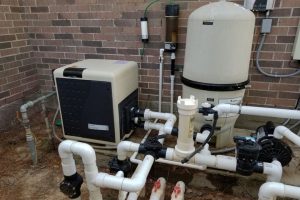
One common misconception among homeowners looking to add a pool to their property is that salt water pools do not have chlorine. That couldn’t be further from the truth, as salt water pools do feature chlorine. Of course, the levels of chlorine are certainly lower than a traditional chlorine model, though. A saltwater generator will produce hypochlorous acid for sanitation through a process called electrolysis. This is the breakdown of salt by passing electricity through a saltwater solution. With a smaller salt content than most expect, it is possible to open your eyes underwater in a saltwater pool.

Saltwater Pool Pros And Cons

Here is a look at some of the pros and cons of owning a saltwater pool:

Pros:

  • Softer on a swimmer’s skin than chlorine pool
  • Lower chlorine levels
  • Costs less for maintenance chemicals
  • Requires less maintenance overall

Cons:

  • More expensive installation
  • Uses more electricity for operation
  • Repairs usually require professional service
  • Salt water can damage surrounding plants and soil

Chlorine Pool Pros And Cons

Pros:

  • Uses less electricity to operate
  • Less costly up front
  • Does not damage pool features
  • Maintenance can be performed by homeowners

Cons:

  • Higher amount of chlorine
  • Can cause itchy skin
  • Needs to be shocked more often than saltwater pools
  • Frequent maintenance needs

Pool Costs

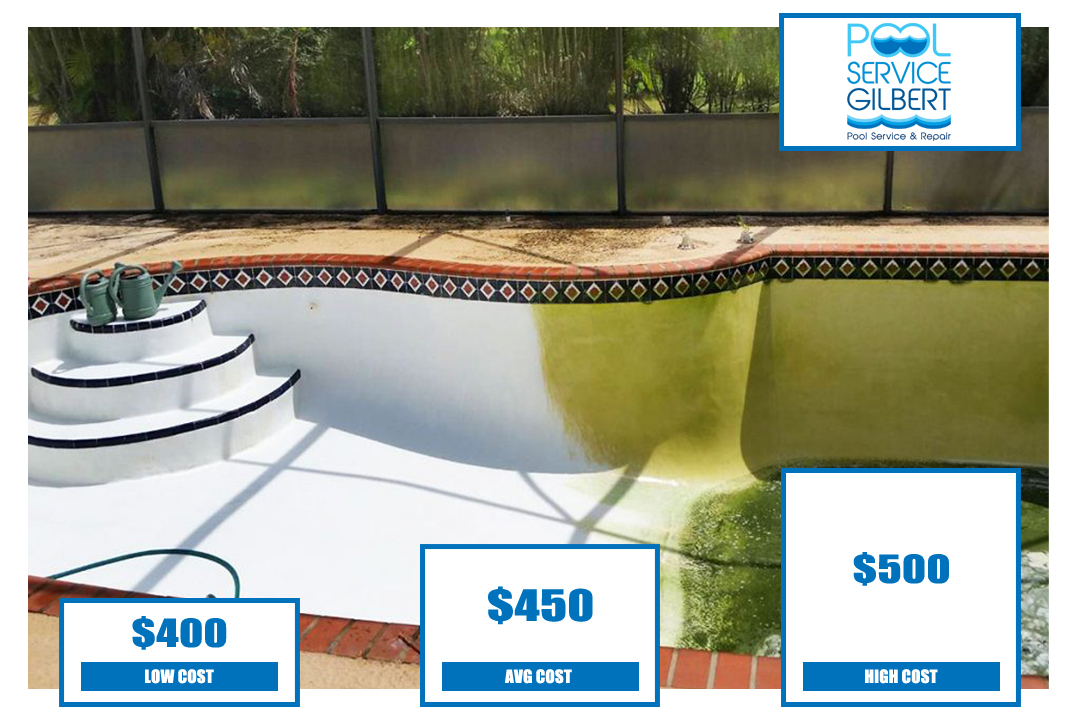
Due to the generator, a saltwater pool will cost more up front than a chlorine pool, costing between $400-$1,800, according to fixr. Homeowners can expect to pay anywhere from $300-$500 for installation. Saltwater pools will require less than $100 per year in salt and chemicals. A chlorine pool, meanwhile, can require $300-$800 per year in chemical costs.

Pool Maintenance Requirements

The greatest benefit a saltwater pool provides is the lack of maintenance needs. Most modern saltwater models can remain clean and sparkly for two weeks without any maintenance. A chlorine pool will need weekly attention, with tablets or sticks added to the water regularly. Both pools do need chlorine levels checked consistently to keep the levels safe, though. Periodic shocks of more concentrated chlorine will be needed with a chlorine pool. These shocks help to defend against the buildup of algae. 

Pool Service Gilbert

Pool Service Gilbert is a family-owned and operated business that has been serving the valley since 2004. We offer reliable and affordable pool services, including repairs, equipment installations and more! Our service area includes Ahwatukee, Chandler, Gilbert, Mesa, Phoenix and Tempe, Arizona. Contact us right here for your upcoming pool service needs.

More Articles About Pool Care

HOW TO KEEP A SMALL POOL CLEAN WITHOUT A FILTER
Written by webtechs

How To Keep A Small Pool Clean Without A Filter

Keeping a small pool clean without a filter can be a difficult task for homeowners. If you are searching for “how to keep a small pool clean without a filter“, this article will help!

Cleaning The Pool Without A Filter

Having a small pool on your property will certainly come with some pros and cons. Smaller pools will mean less cleaning and any maintenance requirements will be finished quickly. Since the smaller pools are generally built within the ground, though, plants and other bugs can become somewhat troublesome.

The presence of insects and plants usually means algae may grow in the area, unfortunately. Consistent cleaning is the only way to prevent algae growth and discourage unwanted agents from the area.

Best Ways To Clean A Small Pool

What are the best ways to perform any cleaning tasks for a small pool without a filter? One suggestion is to invest in electric swimming pool batteries for any cleaning needs. These cleaners will require no filter for use. Even better, no cables, plugs or cables are needed for these maintenance tasks.

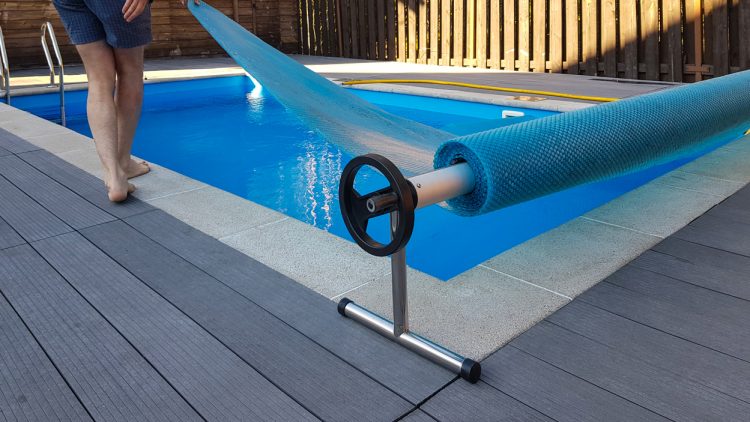
Pool covers are a cheap yet effective way to keep the pool as clean as possible. Covers will generally protect against any kind of debris, dust or insects. These covers are also a great choice for homeowners with young children and/or pets. Purchasing a sturdy pool cover will help you breathe easy, knowing your children are safe from falling in accidentally.

Covers are vital in a place like Arizona. This will help maintain a pool’s temperature during the hot summers. Using a cover in the winter will simply help preserve the water during the cooler seasons.

Cleaning Chemicals

Chemicals are much better options than trying to clean your pool with covers, nets and soap. Common household chemicals, such as rubbing alcohol, baking soda and white vinegar can be used for these tasks. 60 percent alcohol has been proven to remove any sort of sticky gunk from the pool area. Vitamin C can also be used as a stain remover. Baking soda can be used to maintain the pool’s alkalinity.

The most common chemicals are used by your pool care professionals. Chlorine, borax and algaecide are three usual chemicals used for maintenance purposes. Chlorine will kill all sorts of agents in the pool, with algaecide needed if issues persist.

Chemicals To Use For Small Pools

  • Chlorine
  • Algaecide
  • Borax
  • White Vinegar
  • Vitamin C
  • Rubbing Alcohol
  • Baking Soda

How Much Does A Pool Cleaning Service Cost?

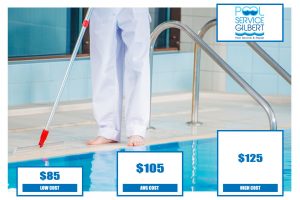
The average pool service costs in the Phoenix, AZ area range from $85 to $125 per month. Typically, any pool owner can expect to pay around $105 per month for cleaning services. Use this post to help determine a budget for any upcoming pool services you may need in the future.

How Much Does Pool Service Cost in Phoenix Arizona

Pool Service Phoenix

Pool Service Gilbert is a family-owned and operated business that has been serving the valley since 2004. We offer reliable and affordable pool services, including repairs, equipment installations and more! Our service area includes Ahwatukee, Chandler, Gilbert, Mesa, Phoenix and Tempe, Arizona. Contact us right here for your upcoming pool service needs.

More Articles About Pool Care

Pool Cleaning Service Near Me
Written by webtechs

Pool Cleaning Service Near Me

Pool Cleaning Service Near Me

If you are searching for “pool cleaning service” or “pool cleaning service near me,” then Pool Service Gilbert is here to help!

Pool Cleaning Services

It’s important to know ahead of time exactly which services you desire when creating an overall budget. Pool services will definitely check the chemistry of your water, empty your skimmer baskets and pool pump baskets, among other basic cleanups. Most companies will generally offer the additional services listed below. Homeowners can expect to pay a few hundred dollars every month for regular pool cleaning services. If you are hiring a company to get a pool that you rarely use ready for a special event, expect to pay even more. It will cost a lot more to clean a pool that hasn’t been well maintained. Extra Cleaning Services That May Be Offered:

How Much Does A Pool Cleaning Service Cost?

The average pool service costs in the Phoenix, AZ area range from $85 to $125 per month. Typically, any pool owner can expect to pay around $105 per month for cleaning services. Use this post to help determine a budget for any upcoming pool services you may need in the future.

How Much Does Pool Service Cost in Phoenix Arizona

Weekly Pool Cleaning

Most pool cleaning services come weekly, but they can adjust to your preferred schedule. Services can be provided weekly, bi-weekly or even monthly, depending on your needs. Charges are generally less when you invest in weekly cleanings because it is much harder to maintain the pool when it is not cleaned on a regular basis. Getting a cleaning service once a month will usually force the pool owner to perform more maintenance in between services.

In general, pool sizes will not vary too much in Phoenix, AZ. But, because cost will be calculated depending on chemicals used, the size of the pool is an important factor when homeowners create a budget for these services. You will have to pay the service provider for their time, but you could see higher costs with a bigger pool on your property.

Other Pool Service Costs

There are several other costs associated with owning a backyard pool besides routine weekly maintenance fees. It is recommended to acid wash your pool whenever you notice a buildup of harmful algae. Generally, this cleaning process should be done during the winter time when you can drain the pool completely. Several pool cleaning services can handle this task if you prefer not to do it yourself. Pool pumps and tiles are subject to wear and tear, as well. There may come a time over the course of pool ownership when you’ll have to either replace or replace the pump and/or tiles.

Acid Wash

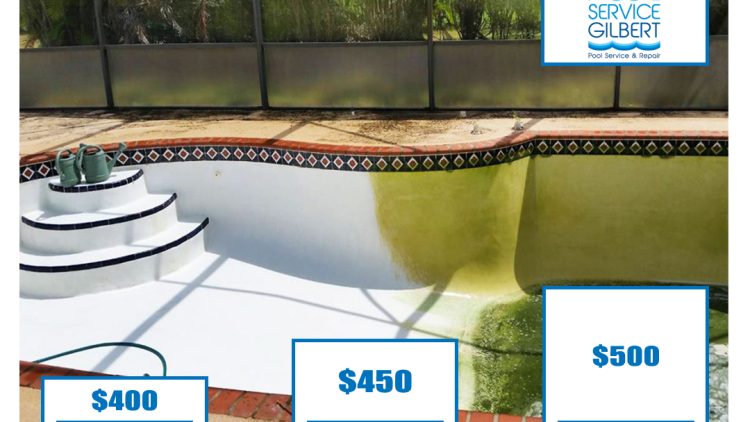
Having a pool built is a spectacular way to get more out of your backyard, but pools require routine maintenance to keep the pool water clean and for the prevention the building up of algae and stains. When you neglect your pool for any amount of time, the growth of algae starts to stain the surface of the pool making the water slimy. If the water is stagnant and you are unable to see the bottom, it’s time for the pool to be drained for an acid wash. It may also be a good idea to acid wash a pool if calcium deposits have started discolorations.

When you start to see algae growth or build-up of any kind, it’s time to drain the pool and call the professionals for an acid wash. The algae may appear green, black or even yellow. Regardless of the color, this unwanted agent has no business being in your pool. Invest in a proper and thorough acid wash for your valuable pool. Acid washing can only be performed in pools with either plaster or Pebble Tec surfaces. A professional will be able to take a look at your pool before the cleaning. If he or she determines the plaster is too thin, then the acid wash cannot be completed. The only option at that point is to resurface the pool altogether.

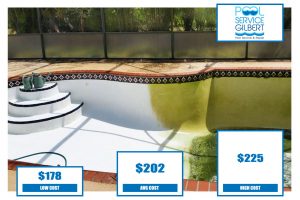
Acid Wash Pool Cost:

Acid Wash Pool Cost

Pool Pump Replacement

There are five obvious signs to look for when it comes to pool pump repairs, listed above. Rumbling noises should be noticed right away. Excessively-vibrating pumps will create sometimes loud and consistent noises. The most common reason for the noise is a pump coming loose or dislodged. Get this issue fixed right away before it becomes a larger problem. The good news for pool owners is this issue won’t require a costly repair.

Grinding sounds can be confused as rumbling at first. But, there is a big difference between these various sounds. Grinding means your pump needs new bearings. Older bearings can lead to motor overheating. Bearings are typically cheap, but replacing them requires opening the pump. This is a task best left to the pool service professionals.

Even a well-maintained and routinely checked pump will wear out over time. These pool pumps can last between 8 to 12 years. However, many pool owners may notice failure at an earlier age. If your pump is getting up their in age, it’s time to start thinking about repairs and/or replacement.

Bubbles in your pool water may seem innocent, but this is not a good sign at all. Bubbles are a clear indication of an air leak in your pump. Dirty water can result from an air leak and can pose numerous health hazards. Have a pool cleaning service check this issue out immediately.

Pool Pump Replacement Cost: 

How Much Does It Cost To Replace A Pool Pump?

Pool Tile Replacement

Most of the signs of pool tile wear and tear will be obvious. First, if you ever begin to notice that your tiles are simply falling off the pool walls, then it is time to replace the tiles. You may see white deposits developing along the tiles. The first step to remedy this issue may be to acid wash the pool. You can either do this yourself or call a professional service for the job. If the white deposits remain, though, then you need to replace the tiling. Even if the pool tiles are not falling off the walls, any chips or cracks are reasons enough to get new tiles.

It’s possible for the tiles to lose color over time. This is another sign to get them cleaned or replaced altogether. It doesn’t just mean these tiles will turn white with deposits. Tiles could become discolored and appear brown or green. Replace the tiles when you notice any of these four common issues.

Pool Tile Replace Cost (per square feet):

Pool Tile Cost Per Square Foot

Pool Service Phoenix

Pool Service Gilbert is a family-owned and operated business that has been serving the valley since 2004. We offer reliable and affordable pool services, including repairs, equipment installations and more! Our service area includes Ahwatukee, Chandler, Gilbert, Mesa, Phoenix and Tempe, Arizona. Contact us right here for your upcoming pool service needs.

More Articles About Pool Care

Pool Tile Replacement
Written by webtechs

Pool Tile Replacement

Pool Tile Replacement

If you are searching for “pool tile replacement,” then this post will serve as your guide! Pool Service Gilbert is here to offer tips on when to retile your pool and give estimates on overall costs of any tiling or retiling projects. 

Replacing Pool Tiles

Most of the signs of pool tile wear and tear will be obvious. First, if you ever begin to notice that your tiles are simply falling off the pool walls, then it is time to replace the tiles. You may see white deposits developing along the tiles. The first step to remedy this issue may be to acid wash the pool. You can either do this yourself or call a professional service for the job. If the white deposits remain, though, then you need to replace the tiling.

Even if the pool tiles are not falling off the walls, any chips or cracks are reasons enough to get new tiles. It’s possible for the tiles to lose color over time. This is another sign to get them cleaned or replaced altogether. It doesn’t just mean these tiles will turn white with deposits. Tiles could become discolored and appear brown or green. Replace the tiles when you notice any of these four common issues

Types Of Pool Tiles

These are the main types of pool tiles used by homeowners currently:

Pool Tile Replacement Cost

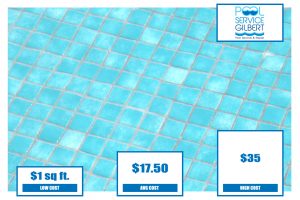
Pool tiles are generally priced by square footage. The national average cost of standard pool tiles is $17.50 per square foot, with costs ranging from $1-$35, according to Homeadvisor. Standard pool tiles include porcelain, ceramic and stone tiles. Meanwhile, premium tiles can cost between $35-$100 per square foot. High-end ceramics, handmade murals and glass would all fall under the premium tile label. Ceramic is typically the cheapest pool tile material available for purchase, starting at just $ 1 per square foot. Mosaic, the highest-priced option, starts at $75 per square foot.

Pool Tile Cost Per Square Foot

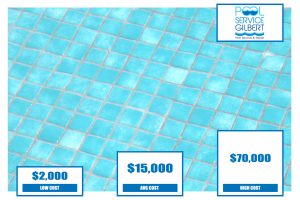
So how much does it cost to tile or retile an entire pool? The typical range in the U.S. in 2021 is $2,000-$70,000, depending on how large the pool is. Pool tiling will cost an average of $15,000, but high-end materials and a large pool area will only increase the total cost. Installation of tiles can cost as much as $5,000.

Pool Tile Cost

Common Pool Tile Problems

A pool in good health should have a clear/bluish hue. But we have all seen pools that look murky, green, and totally un-swimmable. Pools that are green in color are most likely overrun with dangerous algae, which is the most typical pool issue that homeowners face. Algae usually infects pools that have chlorine levels that are too low. If your pool is starting to turn green, it’s wise to hire a professional pool maintenance company to eliminate the algae. After that, you should boost the amount of chlorine you put in your pool for the prevention of future algae infection.

Whereas chlorine is perfect for keeping algae from growing in your pool, excessive chlorine could be just as troublesome as algae. When you get intense eye irritation or find it hard to see underwater, you might have excessive chlorine levels in your pool. The best way to know how much chlorine your pool has is by measuring it with test kits, strips and readers making sure those levels stay unchanging.

Pool Cleaning In Gilbert, AZ

Pool Service Gilbert is a family-owned and operated business that has been serving the valley since 2004. We offer reliable and affordable pool services, including green pool cleaning, acid washing, repairs, equipment installations and more! Our service area includes Ahwatukee, Chandler, Gilbert, Mesa, Phoenix and Tempe, Arizona. Contact us right here for your upcoming pool service needs!

More Articles About Pool Care

How To Clean A Green Pool Fast
Written by webtechs

How to Clean a Green Pool Fast

How To Clean A Green Pool Fast

If you’re searching for how to clean a green pool fast this post should help! Cleaning a green pool can be a challenging thing to do because this could be caused by weeks or possibly months of pool neglect. Subject to how bad the water is it could be something you can take on yourself, but if you have attempted previously with no results, it might be time to contact pool cleaning experts like Pool Service Gilbert particularly if you live around the Phoenix metro area.

Why is my swimming pool green?

There can be a multitude of reasons for a swimming pool to turn green, a lot of these can be tracked down to improper pH/alkaline levels, presence of metals, growth of algae, failing filtration system, or organic debris in the pool’s water. Some of these are easier to because there are tree branches, leaves, insects, or possibly clouded water floating in the pool. Nevertheless, something such as pH or alkalinity is required to be measured with a testing kit and then adjusted accordingly using chemicals such as chlorine or algaecide.

Cleaning a Green Swimming Pool

In any event the reasoning why your swimming pool water is green or if you’re just wondering how to clean a green pool quickly you need to follow the same steps. Even when you come to the realization that cleaning your green pool is a job left up to the professionals, we follow the same method as the one details in this post, but, in severe circumstances drain the pool and power spray the pool and pool tiled areas until they are clean.

Step 1.) The removal of organic debris

This should be obvious because organic debris such as leaves, branches, insects, and anything else that has fallen into the pool will start to break down and circulate bacteria. By taking out organic debris initially, it will make things easier on the pool’s filtration system and guarantees that any pool chemicals added won’t be hindered by debris in addition to speeding up the breakdown of debris in the pool. This will also provide the additional benefit of stopping or at least decrease the growth of any algae spores presently in the water. Be wary to not disrupt the water too much because this could cause bacteria to circulate.

Step 2.) Assessment of pool water chemistry

Following that, you would want to utilize a pool testing kit to get a benchmark for your pool chemistry such as this one to look for bromine, acid demand, chlorine, pH, and entire alkalinity. When necessary you can take a sample of your pool water and have it tested at your local pool store, but they suggest getting a water sample 12 to 18 inches below the water’s surface and to get a sample in the morning before the sun has a chance burn off the chlorine.

Step 3.) Shock your pool water

To correctly shock a pool, you’ll need to know how to shock a pool properly and what occurs when doing so. Even though it is known as “shocking” a pool, basically you are increasing the chlorine levels of the pool above what common levels should be at. This assists in killing any leftover bacteria in addition to algae that might still leftover following the removal of the organic debris. You should note, this will typically turn the water cloudy, but it should clear up within 24-48 hours. It is recommends shocking a pool at nighttime to bypass UV interference and that pH levels need to be between 7.2 to 7.4 for the ideal results.

Step 4.) Pool filter and vacuum

Following your pool being shocked and the algae dying off because of the shock or the algaecide it’s now the time to filter and vacuum your pool. By vacuuming the pool prior to running the filter you’re making the job smoother on the cartridge, sand, or Diatomaceous Earth filter because when not done correctly you might need to have a professional replace your pool pump. A lot of pool professionals agree to run pool filter for no less than 24 hours continuously and to backwash the filters to stop clogs from entering the filtration system.

Step 5.) Keep up with proper pool maintenance

After all your hard work is done and your pool isn’t green or cloudy anymore it is time to concentrate on a routine daily, weekly, and monthly maintenance regime. Or when you’re new to pool maintenance you can consult this Beginner’s Guide to Swimming Pool Maintenance for additional reading. Make sure you are backwashing your filters routinely in addition to skimming any debris that might have fallen in the pool too.

How to Clean A Green Pool In 24 Hours

Do people to clean their green pools in 24 hours? Yes! Follow the below steps to clear up your green pool in 24 hours:

  • Test the pool water
  • Balance your chemicals and PH accordingly
  • Remove any debris
  • Shock the pool
  • Brush the pool
  • Vacuum the pool
  • Run the pump for continually for 24 hours

Green Pool Cleaning In Gilbert, AZ

Pool Service Gilbert is a family-owned and operated business that has been serving the valley since 2004. We offer reliable and affordable pool services, including green pool cleaning, acid washing, repairs, equipment installations and more! Our service area includes Ahwatukee, Chandler, Gilbert, Mesa, Phoenix and Tempe, Arizona. Contact us right here for your upcoming pool service needs!

More Articles About Pool Care

Pool Chemicals 101
Written by webtechs

Pool Chemicals 101

Pool Chemicals 101

There are several pool care products available and not only is it difficult to understand what their role is in maintaining pool water balances. Keep reading to learn more about pool chemicals and what they for your swimming pool.

What Are the Mainly Essential Pool Chemicals?

What Do the Pool Chemicals Do?

Algaecides:

These are put to use to hinder the growth of algae in the pool and to provide preventative measures, so algae doesn’t grow from the beginning.

Alkalinity Balancers:

These maintain a stable range of alkalinity to guarantee your swimming experience is a pleasant one.

Alkalinity Increaser:

It increases the levels of alkalinity. When you have low complete alkalinity, it could cause the pool water to come to be corrosive to plasters, metals and other pool materials causing carving, staining or deformation of surfaces in and around the pool. Proper Alkalinity hinders these issues and removes what is informally called “pH bounce” providing a shield against big differences of the pH in the water. For pools that have a vinyl liner, the alkalinity ranges should be 80-120 and 125-150 is perfect for other kinds of pools.

Calcium Hardness Increaser:

This increases the levels of calcium hardness in the swimming pool water. Lower calcium levels cause hardness problems and can cause the pool water to become caustic, resulting in carving, staining, and pool finish deformation. Plaster impacted by this might become unpleasant and abrasive for those swimming. Irregular plaster could also be a source of algae issues and making the cleaning process a lot more difficult.

Chlorine Stabilizer:

This aids in stabilizing the pool chlorine and hinder chlorine loss because of the effects of the sun. The pool filter or backwash is required to be cleaned prior to the addition of the stabilizer to the pool. The pH lever of the pool needs to range from 7.2 to 7.8.

Cyanuric Acid

By itself, chlorine doesn’t like to stick around in water—particularly when it comes to sunlight. The reasoning you might require cyanuric acid. Cyanuric acid is a pool stabilizer that assists in keeping more chlorine in the pool, which means having a cleaner pool, and paying less on chlorine. A lot of chlorine tablets have cyanuric acid, but it’s critical not to have too little or too much of it in your pool to avoid misuse of chlorine and your pool getting damaged.

Hardness Balancers:

Balancers maintain your pool’s water in the perfect calcium hardness range of 200-300 ppm.

pH Balancers:

These balancers keep a healthful pH level in your pool. pH Down is a chemical in a granulated form intended to gradually decrease the PH level of the pool water. Nevertheless, pH Increase accomplishes the opposite. pH should preferably range around 702 and 708 for perfect water quality and chlorine action. For vinyl lined pools, the perfect pH is 7.6. Without fail use an accurate and respected pH test kit because it is one of the most essential facets of pool maintenance.

Sanitizers:

Probably one of best chemicals that can be utilized to terminate bacteria and keep algae, viruses, and other pollutants from developing in your water. The 2 most favorable kinds of sanitizers are chlorine and bromine.

Shock:

As the sanitizer is overburdened, pool shocks clean the pool following a lot of people having used it following a rainstorm. By shocking your pool, you terminate bacteria outside of impacting the chlorine levels. Pool shock goes a long way in maintaining the pH balance

Pool Service in Gilbert, AZ

Pool Service Gilbert is a family-owned and operated business that has been serving the valley since 2004. We offer reliable and affordable pool services, including repairs, equipment installations and more! Our service area includes Ahwatukee, Chandler, Gilbert, Mesa, Phoenix and Tempe, Arizona. Contact us for your upcoming pool service needs or call us at 480-748-3022 for more information.

More Articles About Pool Care

How Much Does It Cost To Replace A Pool Pump?
Written by webtechs

How Much Does It Cost To Replace A Pool Pump?

Bubbles in your pool water may seem innocent, but this is not a good sign at all. Bubbles are a clear indication of an air leak in your pump. Dirty water can result from an air leak and can pose numerous health hazards. Have a pool cleaning service check this issue out immediately.

When Is It Time To Replace A Pool Pump

There are two elements in pool pumps: the pump device and the motor device. Either one could fail and will need your attention. indicators that it’s time to replace your pool pump comprise of:

  • Total motor failure
  • Loud noises coming from the motor
  • The pump isn’t pumping water, or the pump is leaking

Pool-Pump-Repair-Near-Me-Gilbert-AZ

Replace the Pump Or Motor

If the pool pump is somewhat new (ten years old or less) and the exterior of the pump does not show indications of degradation, just replacing the motor could be a good idea. When the pump has some age to it, and the motor replacement parts are exhausting to track down or when the cost of the motor replacement is higher than 75% of the cost of a total pump replacement, total pump replacement is the route you should take. If the pump is still under its warranty, then totally replace the pump. Motor replacement is a lot less expensive than replacing the entire pool pump. Replacing the pump yourself costs somewhere between $25 to $200, whereas hiring a professional could cost an additional $40 to $100.

DIY Or Hire A Pro?

Pool pump replacement requires fundamental knowledge of and confidence level with electrical undertakings. Failing to take adequate precautions or to properly wire a new pool pump can lead to considerable injury, new pump damage, or even property damage. If you are not confident working with electrical parts, replacing the pool pump isn’t a good DIY undertaking and you would be better off hiring a qualified pool professional.

Pool Pump Replacement In Gilbert, AZ

Pool Service Gilbert is a family-owned and operated business that has been serving the valley since 2004. We offer reliable and affordable pool services, including repairs, replacement, equipment installations and more! Our service area includes Ahwatukee, Chandler, Gilbert, Mesa, Phoenix and Tempe, Arizona. Contact us right here for your upcoming pool service needs! Call us at 480-748-3022 for more information.

How Much Does It Cost To Replace A Pool Pump?

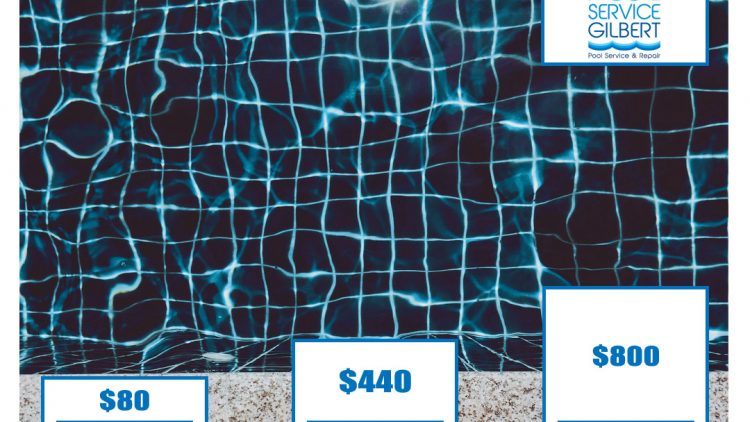
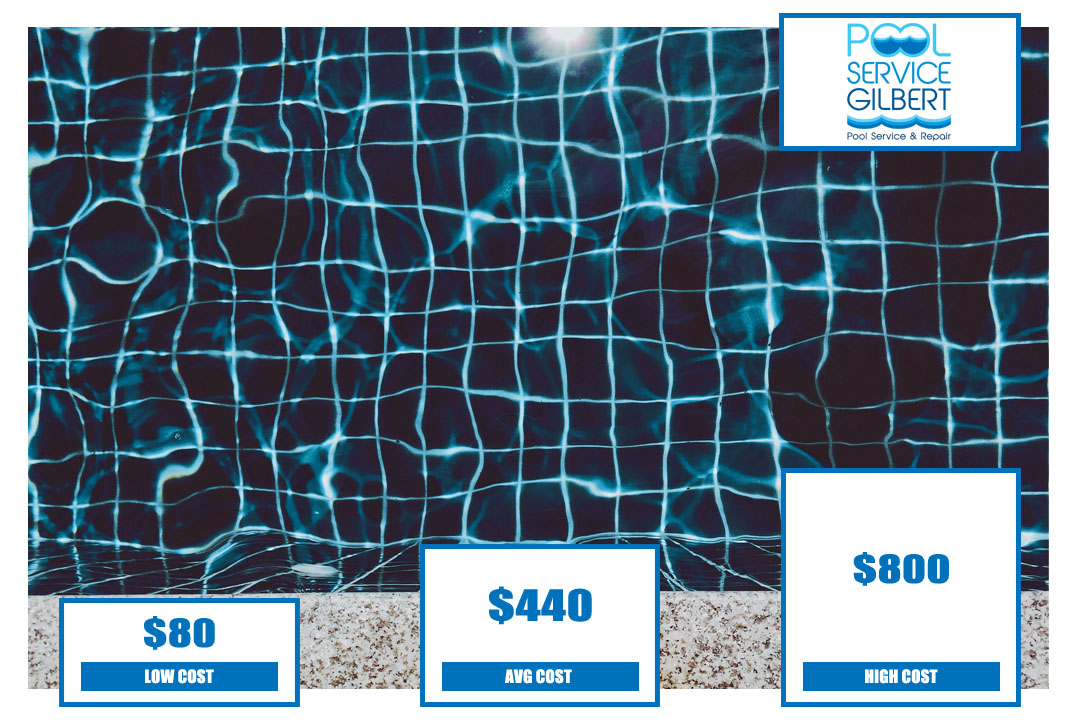
On average, replacing your pool pump costs around $440, costs ranged from around $80 to $800 for pool pump replacement in the US in 2020 as reported by to improvenet.com. These averages include labor.

Pool Pump Replacement Cost

Owning a pool involves routing maintenance, comprising of repairing the pool liner, repairing the pool heater, and replacing the pool pump. Your pool pump is a vital component of the pool’s filtration system, and as time goes on, they wear out. On average, higher quality pool pumps should be replaced every 8 to twelve years. If you do it yourself it includes the cost of the replacement pool pump, which could run from $150 to $800 or more subject to the kind of pump. When you hire a professional, the cost includes the cost of labor, that is an added $80 to $200.

How Much Does It Cost To Replace A Pool Pump?

Signs You Need To Replace A Pump

There are five obvious signs to look for when it comes to pool pump repairs, listed above. Rumbling noises should be noticed right away. Excessively-vibrating pumps will create sometimes loud and consistent noises. The most common reason for the noise is a pump coming loose or dislodged. Get this issue fixed right away before it becomes a larger problem. The good news for pool owners is this issue won’t require a costly repair.

Grinding sounds can be confused as rumbling at first. But, there is a big difference between these various sounds. Grinding means your pump needs new bearings. Older bearings can lead to motor overheating. Bearings are typically cheap, but replacing them requires opening the pump. This is a task best left to the pool service professionals.

Even a well-maintained and routinely checked pump will wear out over time. These pool pumps can last between 8 to 12 years. However, many pool owners may notice failure at an earlier age. If your pump is getting up their in age, it’s time to start thinking about repairs and/or replacement.

Bubbles in your pool water may seem innocent, but this is not a good sign at all. Bubbles are a clear indication of an air leak in your pump. Dirty water can result from an air leak and can pose numerous health hazards. Have a pool cleaning service check this issue out immediately.

When Is It Time To Replace A Pool Pump

There are two elements in pool pumps: the pump device and the motor device. Either one could fail and will need your attention. indicators that it’s time to replace your pool pump comprise of:

  • Total motor failure
  • Loud noises coming from the motor
  • The pump isn’t pumping water, or the pump is leaking

Pool-Pump-Repair-Near-Me-Gilbert-AZ

Replace the Pump Or Motor

If the pool pump is somewhat new (ten years old or less) and the exterior of the pump does not show indications of degradation, just replacing the motor could be a good idea. When the pump has some age to it, and the motor replacement parts are exhausting to track down or when the cost of the motor replacement is higher than 75% of the cost of a total pump replacement, total pump replacement is the route you should take. If the pump is still under its warranty, then totally replace the pump. Motor replacement is a lot less expensive than replacing the entire pool pump. Replacing the pump yourself costs somewhere between $25 to $200, whereas hiring a professional could cost an additional $40 to $100.

DIY Or Hire A Pro?

Pool pump replacement requires fundamental knowledge of and confidence level with electrical undertakings. Failing to take adequate precautions or to properly wire a new pool pump can lead to considerable injury, new pump damage, or even property damage. If you are not confident working with electrical parts, replacing the pool pump isn’t a good DIY undertaking and you would be better off hiring a qualified pool professional.

Pool Pump Replacement In Gilbert, AZ

Pool Service Gilbert is a family-owned and operated business that has been serving the valley since 2004. We offer reliable and affordable pool services, including repairs, replacement, equipment installations and more! Our service area includes Ahwatukee, Chandler, Gilbert, Mesa, Phoenix and Tempe, Arizona. Contact us right here for your upcoming pool service needs! Call us at 480-748-3022 for more information.

Ways To Resurface A Swimming Pool
Written by webtechs

How To Remove Calcium From Pool Tile

Ways To Resurface A Swimming Pool

This post is going to discuss calcium scale, a type of calcium carbonate, also known as lime scale. A lot of the Us has hard water, in which could produce calcium deposits forming on your pool tiles.

What is the Cause Scale in a Pool?

Calcium carbonate occurs due to pool water evaporating during summer months around the water line in the pool. Calcium crystals form as nodules that dot the surface of your pool tile or metal surfaces and can even cause encrusted deposits in the corners of your pool. This happens due to high calcium hardness that is caused by elevated pH levels, high alkalinity, and increased water temperatures.

How You Can Prevent Calcium Scale?

  • Stay away from using calcium hypochlorite shock, which adds calcium to your pool.
  • Maintain your pH and alkalinity reduced by having a 7.2 – 7.4 pH level and 80 ppm alkalinity.
  • Use a purifier to cluster calcium together to be filtered in the pump.
  • Balance the Langelier Saturation Index (LSI) of your pool. This is what establishes the propensity to scale. An LSI calculator will receive 5 water test results and will do the math for you.

How You Can Remove the Calcium Scale?

You can remove calcium scale build-up utilizing muriatic acid or using a dry acid that gets dissolved in water. You can use a sponge for smaller areas and/or using a watering pot for the larger areas. Make sure that you wear gloves and safety goggles for the removal of scale with acid. It releases noxious fumes, will fizzle and bubble as the calcium scale build-up gets dissolved. Acid magic can also be used.

Removal of Calcium Deposits on Pool Tile:

Lower your water level to the base of the tiles and prepare the acid solution. Apply your solution with a broad sponge or wire brush. Use a wire brush or putty knife to assist you in the removal of the deposits. Rinse it off with water after one minute and then re-apply as needed. Using a pumice stone or pool stone can also help to remove calcium scale with a bit of hard work. Having a bead blasting company to come to your house and remove the scale. A lot of them use magnesium sulfate, that is a less aggressive form of salt rather than using beads or sand.

Removing Calcium Deposits on Your Pool Plaster:

A lot of white plaster pools are going calcium scale all over the place, but you will not notice it since the plaster is white. Black or grayish plaster pools will also have calcium layer, but it is rather visible. Utilizing acid washing, darker colors can be restored. For the removal of calcium, start with a pool pumice stone and determine if you can do the entire pool by sanding off the calcium. Or draining the pool and having it acid washed or pressure washed.

The Removal of Calcium on Efflorescence on Your Stonework and Tile:

Comparable to calcium scale produced by water, efflorescence happens in grout in between stone or tiles close to water fixtures. No matter what is causing the moisture to come from backside of the tile or stone throughout the grout will produce calcium. This is the same kind of process that produces stalagmites. Occasionally the moisture comes from the pool itself. A sealer can be used on the tiles to help act as a barrier. For larger stone or tile that are above the pool water, you might need to seal the water source for the prevention of efflorescence. Even if your water is hard water, you can manage and prevent calcium deposits with a little hard work, cleaning solutions and ideal water balance.

Calcium Removal In Gilbert, AZ

Pool Service Gilbert is a family-owned and operated business that has been serving the valley since 2004. We offer reliable and affordable pool services, including acid washing, repairs, equipment installations and more! Our service area includes Ahwatukee, Chandler, Gilbert, Mesa, Phoenix and Tempe, Arizona. Contact us right here for your upcoming pool service needs!

More Articles About Pool Care

1 6 7 8